Building a Venture Firm in the Age of AI: Sourcing, Trust, and Brand
03
Episode Summary
In this episode, Earnest Sweat and Santosh Sankar break down what it really takes to build and sustain a successful venture firm in the age of AI. They cover the shift in sourcing from tracking companies to tracking people years before they found, why winning allocation now matters more than having proprietary deal flow, and how trust is built simply by making promises and relentlessly following through. They explore the pros and cons of being a solo GP versus building a partnership, emphasizing self-awareness, conflict resolution, emotional resilience, and the “shock absorption” needed to support founders and LPs. The conversation also dives into how AI is reshaping junior roles, why unscalable relationship-building remains a core edge, and why the future belongs to curious, creative, and collaborative people who can tinker with new tools, build real networks, and treat their thinking and process as the true product. Additionally, Sam Heshmati of Citizens Private Bank explains how their team combines banking, industry, and venture expertise with deep relationships to solve complex client problems and slightly increase the probability of their success, rather than just selling commoditized financial products.
Show Notes
Topics in this conversation include:
- From Individual Operator to Building a Firm From Scratch (0:36)
- Winning Allocation by Doing What You Say You Will Do (3:10)
- Why Sourcing at Pre-Seed and Seed Is So Hard (5:43)
- Why Problem Solving Beats Product Pushing in Banking (10:27)
- Deciding on Team Structure and Being a Solo GP vs Having Partners (16:22)
- Partnership Dynamics, Conflict Resolution, and Emotional Resilience (19:41)
- The Easy Path, Authentic Strategy, and Staying in Business Long Term (29:03)
- Sourcing as the Lifeblood of Every Investment Firm (35:19)
- Curiosity, Creativity, Collaboration, and Using New Tools (39:02)
- Firm Archetypes: Bands, Small Market Franchises, and Big Market Brands (40:20)
- Why High Agency, Tinkering, and Building With AI Matter More Than Ever (41:36)
Venture has plenty of content. What it lacks is candor and curiosity about the craft. Hosted by Earnest Sweat and Santosh Sankar, Carry On is focused on what building a firm actually looks like, not the highlight reel. Each episode breaks down the X’s and O’s of venture capital, traded openly between two GPs and a small circle of friends who live this work. From first funds to franchise firms, specialists to generalists. Learn more and subscribe at www.carryonpodcast.com.
Full Episode Transcript
Santosh Sankar 00:06
Provided you believe that’s an important thing, you have the self-awareness to go interrogate it. Almost everyone now uses some type of virtual note taker, yeah, and you can engineer a set of prompts to get that answer from the exhaust of your conversation.
Earnest Sweat 00:20
Absolutely,
Santosh Sankar 00:22
but you have to again be willing to believe it’s a priority,
Earnest Sweat 00:25
yeah,
Santosh Sankar 00:25
and have the self awareness to go interrogate, pursue that priority, even if the response might make you feel very uncomfortable and highlight you’re not as good at this as you think you are, so go work harder.
Earnest Sweat 00:36
Yeah, yeah, yeah. That for you, I know we wanted to also talk about like all right from the individual we spoke about the characteristics what they needed to think about before embarking on this journey. All right, now you’ve decided for now you you’re building a firm. Those early days, what does a firm need to have to succeed? succeed, like you know, people typically talk about. We’ve talked about it too. It’s like the market need is aligned and congruent with the managing partners and kind of what they value, and it matches up with a need out there in the market that they have a decision engine, right? That hopefully encourages intellectual honesty, and there’s a lot of introspection with action. Sourcing wedge, which part of that feels now like it could be a little dated and something from like a past generation, but we can talk about that. The institutional operations, both front office and back office, and then as a you know, we talked about kind of the resilience as an individual, but having the emotional durability as a firm is also important. So, what for when you were building your firm early days? What did you think were the most important things to have that required you to be like? If you were looking to be provide industry leading returns, like having that north star, what was required of you? And then now looking back, what what do you think it really requires?
Santosh Sankar 02:22
So back then there were there’s probably two meta things. One was a sourcing apparatus and sourcing engine that I still think exists, and I think it’s never been more important. But how it manifests itself, I think, is very different, especially at the early stage, and I think it’s going from a place where you look for companies and you’re trying to track companies to where you’re now at an extreme extreme where you’re tracking people, maybe even several years before they come to a realization that they want to go on a founding journey, and you’ve built enough trust with them. They understand the metal and the fabric of how you deal with founders, where you become kind of that go
Earnest Sweat 03:09
to. Okay,
Santosh Sankar 03:10
I don’t think there’s any way around that at the pre-seed and seed stage, which is the hardest place to source because the thing you don’t have is a database or a list of friends with portfolios that you can go scour to go find the the next interesting thing. So sourcing was massive for us. But then when we showed up, going back to a bit of self awareness, we asked ourselves like, why why do we show up and have the right to win allocation and maintain that trust with the founder. The way you maintain and grow trust is, in my humble opinion, making a statement or a promise and following through on that, and knowing where you can actually follow through on that. To this day, I would tell you if you want to understand how to like architect the best infrastructure for agentic application. We’re not your guys, guys. Yeah. What we are good at is showing up super prepared because we dwell in an industry and we understand a lot of the minutia of how product is adopted and purchased, or sorry, purchased and adopted an industry in that order. Opening up doors, so actually mobilizing relationships for you, but then also the talent sales relationships, and then the talent is is the third thing. And so very early on, we made a set of promises, and we worked our ass off to make sure we followed through on those promises because we knew all eyes were watching, because guess what? As as a fund that has no track record to lean on, founders are taking a bet on you, just like you’re taking a bet on them by giving up shaving 5% saying I’m going to give this to this new fund that nobody’s heard of. They make all these claims, and the way that they can get comfort and have trust that this was a good decision is by them going through and say, “You made these promises. You know what? Check, check, check. Yeah, and the other investors that are looking will say, “Oh, you know, like they’re great people to work with because they say what they do, but maybe, maybe the bar is that low. The bar is so low that if you just do what you say you would, that’s that’s what like a great firm is. It’s either the bar is that low or it is that simple. But I’ve oversimplified it because delivering that is a lot harder, and most things are a lot harder.
Earnest Sweat 05:43
Yeah, yeah, yeah. It might be a combination of both, but
Santosh Sankar 05:48
and yeah, and and and I think there, I’m in a lot of emerging manager kind of groups and slacks. You’re in these. There’s so many people that are like spend so much time finding the optimal business partner, an optimal fund ad. Like, listen, all that over time, you you can kind of build and and mature and iterate on. You just need to get kind of good enough that these are enablements where you can focus your time on sourcing, selection, and stewardship.
Earnest Sweat 06:19
Yeah, yeah. I think for even with you talking about that, I think how the the game has changed is for each stage that sourcing winning with winning is diligence and stewardship. So once they are part of your portfolio, I think the which matter the most changes as you as the company grows, right? And you know when you were talking about sourcing is still like a key thing. I think when I first started in the industry in 2015, even at Series A, sourcing was like still pretty like important because there weren’t these databases. Like a lot of people didn’t talk to a lot of different types of firms. You know, we’ve I don’t know how many more firms we have now doubled. I don’t know, but like there’s just a lot more firms out there, a lot more information being being shared amongst juniors and seniors, and so at my stage, traction stage, Series A and Series B, like I don’t know if you can have proprietary deal flow, and so what really matters is like you being able to win deals, and so have you figured out? Have you figured out what like that? That’s been like an eye opener to me in kind of this period of like being able to help so many different friends in different places and kind of be like this omnipresent kind of like advisor, and so winning is that much more important. Anybody can like kind of find something at that stage. Yeah,
Earnest Sweat 08:05
but can you win it? Can you show your value? Can you show that you would be the right partner for them? Yeah, right, and that you could help them with the stewardship move up in in revenue, move up in capital, all those things.
Santosh Sankar 08:19
Help them inflect, and I think that’s actually really interesting. I I hadn’t thought of that, but but it makes a lot of sense. Where once you’re established in this day and age, you’re going to end up in a database. Like choose your vendor. Everyone now talks. Most firms have some type of automation where it can kind of go ingest the portfolio company page of you know any fund.
Earnest Sweat 08:46
Yeah, we’re not mention any of them the platforms because they they’re not sponsoring us. Somebody sponsors this. We’ll I’ll say. Hit us up.
Santosh Sankar 08:57
But you’re you’re you’re absolutely right. Like it it then comes down to your ability to kind of select, secure that that investment in your portfolio. But there’s then also this interesting kind of recursive relationship between how you steward a company because that that builds your reputation, who you are, what is your metal as a partner at XYZ firm? Your firm’s brand definitely gives you air cover. I’m not going to kind of ignore that as much as I think one would like to believe that’s not the case. I definitely think that there’s some value there, but kind of how you engage with companies because you know what? What do savvy founders do? They’re gonna go kind of reference who you are. What do you like to work with? Is are you as great as kind of the TechCrunch article makes you seem to be, or are you kind of like a nightmare stretched too thin on too many boards, right? And and if they’re not asking that, I certainly will tell you as see investors, one of the first things I I. My founders is to hey like go get off list references and I’ll help you go do that as well, and that might be kind of the most important thing as you kind of move further down the spectrum.
Earnest Sweat 10:14
Is like yeah, what what is your brand? As we we learned in Kaufman, your brand is what people say when you’re not around.
Santosh Sankar 10:21
Yeah. And now a word from our sponsor.
Earnest Sweat 10:27
In our kind of prep conversation and times we’ve interacted, obviously when making your choice, you talked about the how, but you’ve also spoken to me about why the why in your day to day is more important than kind of like the the what as well. How does that ethos really play out when you’re interacting with your customers and your clients and partners within from a day to day perspective?
Sam Heshmati 10:56
Yeah. Well, the why. Look, we we this is the lucky part of what we do, we get to work at the center of innovation and change, right? I mean, you look at what we get to see so early on that then comes to market, and everybody is gets the benefit of seeing. We get to see it birth essentially in some ways and grow. And there’s something really special when your clients are doing such impactful work. It’s our job to make it super easy on them to do it. And I tell people is we’re not going to be the reason why any given firm or company is successful, but if we slightly increase the probability of success, we’ve kind of done our job. And if we can do it for many, the work becomes pretty gratifying. And so I’d say is we do the banking, but a lot of the the why I would say is is we want to solve problems rather than sell products, and I would say that is fundamentally different than I think most banks in the country. And so we do a lot of work around the edges that are non banking on the value added side to really separate ourselves and solve our clients’ problems, and then if we do all that, and we do banking and we do it really well, and we have the full suite of services, then it kind of becomes a no brainer to want to actually work with us and establish a long term relationship and partnership.
Earnest Sweat 12:18
I love that, and I think we’re in an era where you know everyone’s asking where does knowledge work go, right? You know we were we were in a previous era where the idea of you being very like having a specific expertise and you can go deep on that expertise. That’s why people would come to you, and now with like you know, generative AI and other things, it’s it’s really kind of shuffling where the value comes in the knowledge work or knowledge economy, and so that point that you made about problem solving-that’s what people are looking for. Can people solve problems and be thrown different types of problems and and bring in different analogous solutions or concepts that can help those their clients, their partners, their friends figure things out. And so, my question, knowing that that’s a that’s a that’s a focus of yours in today’s like ever changing market. What should people be coming to their their banking banking partner for, or specifically you all for? Yeah, yeah, yeah. That that that isn’t on the website.
Sam Heshmati 13:32
Yeah, everything. It’s in some ways we’re like in some ways. Look, I think our team and the platform, Citizens Private Bank. It’s it’s interesting because it’s it’s a bank and we do banking. But if you look at the people that we have on the platform, they’re not traditional bankers in a lot of situations. I mean, we have our traditional bankers, but when you talk about as it pertains to the innovation economy and the venture side as a whole, we have folks from industry, from venture that are actually on our platform. We have we have the a former venture CFO that’s on the platform. We have somebody that ran IR at multiple funds and and was head of platform. We just brought on as of a few weeks ago somebody another another person from the venture side of things to help accelerate our startup banking initiative as well. So I think it goes back to the thing: is is we do the banking, you know, as a whole really really well, but all the other things and expertise that people bring from industry, it’s it’s difficult, and technology is super super important, but it’s difficult to really look at it and say something some individual has experienced over a decade of their career is going to get pushed in through any AI, right? And I look at it and I say, you know, serve. Product services kind of they can be commoditized to a certain extent, but the people and the relationships are not. So if you have a fund manager that’s raising a fund, let’s say a fund one manager, you can get a ton of tools around the table, but having access to a CFO that then knows you know how people are going to view the back end infrastructure of your firm, right? Or talking to somebody who’s in direct contact with LPs that you ultimately are looking to get in front of, and and and the I would say the conversations around a lunch table that LPs maybe are willing to have and and talk about that they’re not going to publicly put out there, you know, having access to this type of information and advice on how to approach it and best practices, I don’t think you can just substitute with technology. So I I view it and I say, the the perfect world to live in is the intersection of the people, relationships, and technology. It’s not one or the other, and I think that’s where we’re really threading the needle and working on right. And so it’s it’s not perfect, but I don’t think it’s perfect anywhere yet. But I think we acknowledge and think that that’s that’s the secret sauce and the the winning kind of zone to play in, and and we’re going all in on
Santosh Sankar 16:18
it. And now back to the show.
Earnest Sweat 16:22
Yeah, all those things are important. I think the one thing that we we haven’t touched yet that’s also really important for a firm, and I’m curious how you made the decision is team. And before we get into kind of like overall team and structure and all those things, your partners are very important. Are you going to be a solo GP? Are you not going to be a solo GP? And let me tell some some founders, VCs out there, fund managers. There are some solo GPs that should always be solo GPs, sure, and always intend to be solo GPs, yeah. Even if they have too many, and so there’s a process of understanding, like, am I a solo GP or not? Um, and so talk talk a little bit about like how you made the decision on on teams, and then just from a macro level to how important that is for and what’s required of a firm to have like be have crystal clear congruence on why they have the partnership structure that they do.
Santosh Sankar 17:38
Um, I I have the good fortune of having three other partners I found a dynamo with, and the one thing I recognized when when when I found a dynamo, I was 27 years old, venturing in a sector that at that time was laughable in and around what we describe to be supply chain these days, we talk about as the the industrial Renaissance, and so I knew there there was a few different pieces that needed to be assembled. I was I was the engine. I brought the horsepower vision. How do you practically take vision and start to tactically execute on it, but I needed industry credibility that a couple of my partners led. But I also didn’t know what I didn’t know about venture, and my my partner John at that point had been venturing for 15 years around the world, and and brought that that foresight and hey, this is kind of what the past is like. This is the present. This is how the future might might unfold. And for me, I I enjoy working with people. I think that’s kind of one of the things that that I reflect on quite a bit because the the one thing that I do feel strongly about is I want to keep my firm small. I don’t want to go be a a manager of people. I think a lot of VCs would actually say that most VCs are terrible managers of people, and we could do a whole episode on kind of that. But I I knew I wanted to work with others. It didn’t have to be kind of a voluminous group didn’t have be dozens and dozens of individuals, but kind of the the the right folks that that had ambition. They’re willing to run it hard things in parallel. We’re willing to work hard and kind of had the guts to be wrong because that part of like raising our first fund is like, hey, this may or may not be a thing.
Earnest Sweat 19:41
Yeah,
Santosh Sankar 19:42
a a place to venture, or even if it’s a place to venture, this may not be the approach. But kind of being able to kind of go on this journey with with people who who had that self belief, but also kind of that belief in one another that hey, we might be able to pull this thing off. And kind of where I would take that in terms of importance of of partnership is I think you raised something very interesting where there is now increasingly kind of a larger cohort of solo GPs. I think one needs to be self aware as to do I want to kind of go on a journey with someone else and the the complexities that will arise over time with people working together, where we’re dynamic things, we will have differing opinions, beliefs, and that’s okay. That’s healthy, but if we don’t have a healthy conflict resolution process, that’s where kind of toxicity starts to emerge and embed itself, and kind of poison resentment. And so, kind of being able to understand, hey, like, is this for me or not? The one thing that I always feel with solo GPs, man, they must be so lonely. You can so easily get stuck in your head if you don’t have others to talk things through and work ideas and concepts out. In do you get encumbered in all the other things that you don’t want to do that come part and parcel with running a firm, like audit season and like DDQs when you’re fundraising, all that like there’s there’s less ability for division of labor now in the age of AI. There’s probably been no better time to enable a solo GP with kind of that overhead work than there has been now today, but there’s still so much value in just being able to problem solve.
Earnest Sweat 21:43
I agree.
Santosh Sankar 21:44
And and and the emotional aspect. I think you mentioned emotional resilience.
Earnest Sweat 21:49
Yeah,
Santosh Sankar 21:50
I totally didn’t think about that. And and a couple years in, I started to realize, hey, there’s like an emotional encumbrance of like going on a journey with a founder and being strong for them, being their rock, not being manic. I equally have co nests with investors who can be very manic, like like share their highs and lows with the founders. That’s not to say you shouldn’t be authentic and share how you feel and think about the situation of the founder, but they don’t need to kind of be burdened by your emotions. Yeah,
Earnest Sweat 22:19
they already have like no other place to go within, and so like yeah.
Santosh Sankar 22:24
But that’s where you are going to absorb, and you need to have a shock absorption system. And part of that shock absorption system is any variety of habits and practices one can adopt. Like I’m a big journaler, it helps me a lot. I have a great wife who can enable me, but I also have an amazing partnership that I work through things. Yes,
Earnest Sweat 22:44
yes,
Santosh Sankar 22:45
and I think that’s the thing that I don’t know whether is I don’t know whether people value until it might be a little too late. But the one thing also is you can go, you can start on a solo GP journey, yeah, and at some point, as you give yourself the time to find the right partner to work with, there is a way you can appropriately bring them into the partnership.
Earnest Sweat 23:09
Yeah, yeah, we’ve seen it with people having venture partners, and it doesn’t
Santosh Sankar 23:14
happen fast.
Earnest Sweat 23:15
Yeah, and that’s the thing. You should take your time with such a critical decision, and the other mis because people ask me all the time because like and I keep saying I want to write about this, but I haven’t come up with all the stages for it. But like, there’s like the you know there’s five stages of grief, right? Yeah, and and so I wanted to create something that was like the five stages of spin out. If people have ideas, share. But we all go through this idea of we have to do these certain things. So you leave, and then if you don’t immediately get in back into the game, you’re going to disappear like Marty McFly on the Polaroid, and that’s just not true. You have to like go against those, and it’s really important to find the people that you want to work with, if that’s what you want to do, if you want a partnership with me, like I love being creative. I love like being able to interact with people, and I truly believe partnership should be one long conversation, just like any great relationship. And so many times, whether it’s like I’ve been in these situations and around partnerships like this, or I’ve heard of them, sometimes people treat partnerships like a dentist’s office. And what I mean by that, we’ve all walk walk into went into a dentist’s office, and there’s one admin right at front desk, three different dentists. You go to yours, and that’s all how they interact. They have one office building, but they don’t talk to each other.
Santosh Sankar 24:51
Yeah,
Earnest Sweat 24:52
there’s no sharing of ideas, and I feel like you’re you’re leaving a lot of value on the table, and your portfolio. Will suffer because there isn’t that congruence there because there isn’t that collaboration. So for me, I think it’s it’s it’s an extremely valuable thing. And the other thing is, again, try not to answer the test that you think LPs will make sense. We’re like, oh well, Ernest and Santosh both did this type of industry, and they’ve, you know, they’ve co-invest in these things together, which is important. But it is not the end all be all because we know that stats and characteristics sometimes just look good on paper. How many of us have had favorite sports teams, and it’s like, wow, Kobe and Steve Nash and Dwight Howard and Paul Gasol. Wow, they’re gonna win. They didn’t win shit.
Santosh Sankar 25:51
That’s right.
Earnest Sweat 25:52
And so you have to do the work of knowing like who you are, get to know these people, and I would say the the optimal like the goal should be you find people that you want to win with, and you’re okay with having and you want to not okay but you’re you want if you’re going to like have hard times with you want to be around these
Santosh Sankar 26:16
people
Earnest Sweat 26:17
because we have too many like I’ve seen too many people get in situations with it when they’re with front runners, and those front runners, when things go not even bad sideways, they feel it. They make it felt throughout their entire organization.
Santosh Sankar 26:31
Totally, and I mean, like what our our approach to investment, we we spend a lot of time when we meet a team, we’ll lean in on their dynamics, and some of the questions we ask is like talk about your conflict resolution, and don’t just talk to us about a framework. Like walk us through some of the instances of conflict and how you resolve that against this framework you’ve developed. And I don’t think that’s any different for a venture firm. I think it is just as important. You could argue it’s more important based on what we’ve said previously about relationships. But I I’ve seen it and and and and heard it be trivialized.
Earnest Sweat 27:17
Yeah, at
Santosh Sankar 27:17
point or you believe you have X, but actually you have Y, which is materially different than X, and it takes you a moment of something going sideways or down to realize, hey, it’s I actually don’t have what I thought I had, and as a result, there’s there’s this issue that has been created interpersonally, and that can just completely destroy firms, which is also ILPs take a lot of time to understand when there’s more than one individual how these folks actually work together. Yeah, and they’ll try to ask the same question any number of ways to ascertain whether what they have been told or they perceive is reality.
Earnest Sweat 27:59
This made me. I have one last topic on on this, but that just made me think of when looking to raise a like to start a firm, and you’re talking to other VCs. The amount of times I hear, “Hey, wouldn’t it just be easy if? And it’s not like not doing the firm, but it’s just like, wouldn’t it be easy if you did this strategy, or if you appeal to this founders, or if you just did this size of fund, or you partner with this person because you guys have worked together and all this stuff, without really bringing the human nature into it, the combination of like nobody else has to be in my shoes and know what like I feel and what I believe and and really like why would so many people suggest that you do the easy thing when our whole job is about doing hard things and investing people who are doing really really fucking hard things.
Santosh Sankar 29:03
The one thing I would balance it with is there’s generally can’t say generally. There are at times an easier path than what you might think to solve a hard problem.
Earnest Sweat 29:18
I get that,
Santosh Sankar 29:19
and and and maybe just kind of the more easy way says the simple way of least friction or least resistance.
Earnest Sweat 29:27
Yes,
Santosh Sankar 29:28
and equally, when those types of questions are asked, one it also depends on the party asking them because are they actually asking it to gage your reaction as much as your response or the quality of your response is it more to gage how you think through things and articulate that framework and that structure as to why you’re doing what you do over what it is you’re actually doing. Does that make? Sense. Yeah, like that. That alone kind of has a lot of. Okay, like this is how somebody like creates a framework and works through a framework. This is how they get to a framework. Yeah. Because if I I oftentimes will tell people I actually don’t care about your answer, your output. I care about how you get to that answer because if I agree with that, yeah,
Santosh Sankar 30:19
I can kind of live with
Earnest Sweat 30:21
whatever the whatever
Santosh Sankar 30:22
the output
Earnest Sweat 30:24
is. Yeah, yeah.
Santosh Sankar 30:25
And I think venture is largely a a product that is more of a process. Your your product is a process.
Earnest Sweat 30:36
You and you’re selling your thinking,
Santosh Sankar 30:37
and you sell your thinking.
Earnest Sweat 30:39
Yeah, yeah, yeah, yeah. To to put a bow on that, like I think I agree. I agree with you. The only caveat is a lot of times when people are talking about the road to least resistance, it’s not the hard thing that I was originally talking about. So it’s like a it’s like an it’s like an easier an easier thing that are perceived easier thing, like you know, back in the kind of like 2020s people were saying, “Hey, why don’t you just raise a small fund and invest in people who look like you? And it’s like one, do Series A investing, two that’s not wasn’t that doesn’t feel like it’s my calling, right? And three, I mean, I could come up with other reasons too, but like it’s just like sometimes people can give you perceived easier things. That honestly, if you go down the path, especially if you don’t have any emotion or like calling to it, it will make it. It’s like you’re going through a hard thing that doesn’t even have the benefit of what you want to get out of the experience. That’s kind of what I mean. Yeah,
Santosh Sankar 31:47
but I think that that that comes down to a bit of like go do the hard bottoms up work, kind of align where you have an authentic reason and an authentic investor opportunity fit.
Earnest Sweat 32:02
Yeah, yeah,
Santosh Sankar 32:03
right. And because you’ve done the hard work, you can be convicted in that, regardless of what kind of easy button somebody might might put in front of you. And and I’ll say like, if if if there are investors out there who want to be an investor so bad that they would kind of take that route. Yeah, they might get into business. They might not stay in business.
Earnest Sweat 32:27
That’s the key. It’s about staying in business. Stay in the business you want to be. Last thing I want to say is like we we’ve talked about this over time. I believe even your like your project for Kauffman. Like we’re expected always to do kind of like a end of a fellowship project. Yeah, yours was based on like how what’s what are the I’m kind of bastardizing it, but like what are the tips and tricks to like building a strong firm and talent? Yeah, that actually like doesn’t start at the partnership level, but then works it way up. Where do you think junior? Junior talent, like their place, will be over the next decade.
Santosh Sankar 33:10
I spent a lot of time a few years ago, kind of understanding how various firms approached hiring, retaining, developing talent up through the ranks, from an associate through to the partnership. Frankly, I’m not sure when it comes to practical operational need what the role of an associate is in the age of AI. There is value in the unscalable, and the unscalable being around relationships. I’ve heard a lot of people talk about it as FaceTime. I don’t think about it as FaceTime. I don’t think. I think there’s a whole lot of value in just kind of FaceTime. I think there’s value in finding somebody who is hungry, who is able to build relationships, embed themselves in the middle of really interesting networks and can kind of attract a lot of interesting people within your investment strategy or your area of focus. That’s something AI is not going to be doing anytime soon.
Earnest Sweat 34:12
No,
Santosh Sankar 34:12
that requires to be out and about, exercise your EQ, flex your relationship building muscles, being able to understand where you need to spend more time to double down, I think that’s where ultimately there’s a lot of opportunity to mobilize kind of the junior ranks within venture. Mind you, this isn’t new or novel. They’re private equity firms that have done this for decades and have been vastly successful. Right, the JMIs of the world, the the the on axes of the world, where they’ll go and they have a very specific playbook. They they go into these investment banking programs. They’ll find you like just before your two year anniversary. Promise you could go do investing. Guess what? By investing, you’re pounding payment. Sourcing, but that’s the lifeblood of any investment firm. Like hedge funds are constantly trying to source interesting new opportunities to analyze, invest in private equity. Same way, venture equals no different. Credit no different. Real estate sourcing is the lifeblood of an investment organization. Just what what is it that you’re sourcing?
Earnest Sweat 35:19
Yeah,
Santosh Sankar 35:20
and that’s where kind of over time my my attitude has changed. But I’m not addressing kind of the the big question as to so like what does that mean for talent and bringing people up through the ranks and kind of forming the new partners that will drive the future of an organization because we equally have data from a lot of our LPs that when you try to lateral partner into an organization, it more often than not doesn’t work, doesn’t endure, it’s not sustainable. The best path is kind of to bring people up through a system and then let them take the mantle. And I don’t have an answer for that. And I think a lot of people are trying to figure out the answer for that, and that might be where you do see kind of a a fracturing of we might be willing to take juniors right out of college or earlier than we ever have been as an industry, and bring them up through the ranks. There’s this kind of middle place where you don’t need them to do a whole lot of diligence. Like a lot of diligence can be handed off agentically if you understand how to engineer agents. Like we can we can diligence a an investment about 90 minutes. We spend more of our time now with the team in market with current and prospective customers, the more relationship oriented things, but that might also be where we might need to rethink. If if that’s where we’re spending our time as partners, that might be where we need to also kind of bring the ranks up. It might be more like salespeople.
Earnest Sweat 36:57
Yeah, I I think whatever the answer is for individuals, I think it’ll be like a good the answer to a good business school professor question. It depends, and it’s going to depend on what’s what’s important to you, what’s your what’s your structure, what type of founders you’re going after, and all that. But we’ve been in the industry long enough to see we’ve seen waves in like what the flavor of the month of the optimal junior person, associate, principal, junior partner. I remember when a couple was coming in. As a quick aside, in the 2014 2015 era, it was like, oh, we want product managers. Everybody wanted a product manager. Everybody wanted a product manager, and what we didn’t think about and what we learned is like not all product managers are made similar. And for those who really like operating, they’re going to find venture very annoying because they’re about what there are a lot of roles in operating where you could get feedback constantly. That is one of them, and you’re going into a role where the feedback loops are like long and there’s no kind of like product roadmap that you can see if you’re tracking. It was infuriating for a lot of my friends who went out now. Some who didn’t want to operate anymore-it’s perfect for them. They got to use relationships. They got to use their their technical skills, all that. But what that taught me is that the way I got into the industry is like I had to show value before I ever got a role. And so, what was my curiosity? What was I able to do way before the role and stuff like that? And I think what’s going to be consistent from my story to to what people should be looking for is: do you have very very curious, creative, and collaborative individuals? They need to have all of those. I didn’t mean to say it and sees, but like they-that’s what they need to have.
Santosh Sankar 39:02
Yeah.
Earnest Sweat 39:03
And a quick antidote is, I was at a dinner, one of our dining with allocators dinners, and our our sponsor is at a top law firm, and he was saying they’ve adjusted what they look for because I was like, what does an associate at a law school do now,
Santosh Sankar 39:22
yeah.
Earnest Sweat 39:22
And they were like, “What we look for is that we test them on like their ability to use tools and introduce new tools to
Santosh Sankar 39:28
us. Yeah,
Earnest Sweat 39:29
that is what you’re going to need in associates and principals and partners, and your managing partners need to be able to do it too. And so, I think having those like what in the past would have looked as very soft, like squishy, you know, kind of like oh, they’re not hard and technical, like knowing the technology, knowing how to build it, haven’t that that doesn’t can they tinker?
Santosh Sankar 39:58
That’s right,
Earnest Sweat 39:58
and. It all goes back to for me always. I got a sense when I was like thinking about first thinking about building a firm and even joining firms. What type of firm and franchise is that firm, and that’s how they recruit. And I was thought in kind of like this idea of like bands and sports franchises.
Santosh Sankar 40:20
Yeah,
Earnest Sweat 40:21
some people are the Rolling Stones. This is the band, and we’re gonna go into a 70 and 80, or whenever we quit.
Santosh Sankar 40:31
Yeah,
Earnest Sweat 40:31
we ain’t adding nobody new. This is the band. Other people are small city franchises, so it’s like Utah Jazz, Oklahoma City. Like we’re not getting any top free agents, so we got to be really good at the draft. And then others are like, you know, kind of like the the Lakers, and they’re just like, we don’t care about draft picks, up and out, and once somebody shows that they’re they’re amazing, and we’re starting seeing this now. Venture, maybe they even started a firm. Our brand is better. They’ll come and join us. They’ll leave their firm, their own firm that they started will be defunct now, and they’ll come with
Santosh Sankar 41:18
us. Yeah,
Earnest Sweat 41:19
and so it just it really plays to kind of like what type of franchise or band do you have?
Santosh Sankar 41:25
Yeah,
Earnest Sweat 41:26
and then but I think the consistency is like what you should be looking for in all of your employees that they can really tinker with new tools and they and they can collaborate and and build relationships.
Santosh Sankar 41:36
I think I think for for any hire that has a meaningful level of agency, which not every job outside of venture does. But even associates, if done right, have a level of agency because they get to pick what it is that they’re sourcing, spending time with, how they’re spending their time, where they want to double in, where they want to make a recommendation to. Hey, you should take a call to the principal or partner, and in those roles of of high agency, I think an ability to be curious and get your hands dirty is essential in the age of AI. Yeah, I’m writing code once again. Last time that I used to write code, staying up late at night, I was about 1718, years old. Yeah, I’m in my late 30s now doing that. Yeah, and that’s a function of it’s never been easier to have a technical edge to solve problems that previously felt were challenging and required a very high level of technical aptitude.
Earnest Sweat 42:38
And now you just need to prompt in English.
Santosh Sankar 42:41
You need prompt in English. You need to have you need to have a willingness to read and understand some of the technical underpinnings of how to set up an agent that’s scalable and repeatable. But anybody can do that that has any business sense. Yeah. But again, but you need to have business sense. But more importantly, a curiosity and willing just to get your hands dirty.
Earnest Sweat 43:00
Yeah.
Santosh Sankar 43:00
And be a little frustrated when things don’t work. Yeah, you work through it.
Earnest Sweat 43:03
Yeah, exactly.
Santosh Sankar 43:04
Work through it. It’ll be fine. But the thing that a lot of people don’t realize until they kind of come through the other end is the immense satisfaction you get because you’ve built a thing that is doing something very meaningful and delivering work product.
Earnest Sweat 43:20
Yeah,
Santosh Sankar 43:22
and you’ve heard me say is where I just think at at kind of our our ultimate core, humans are builders. We like building things. We like building kind of pieces of software. We like building things physical. We like building relationships because that means like you get that dopamine hit when you do it well and you do it right. That’s hard to
Earnest Sweat 43:40
feels way better than the algorithm.
Subscribe
Join the Conversation
Stay close to the ideas, operators, and opportunities shaping what’s next.




Your Hosts


Earnest Sweat
Venture Capital Advisor & Emerging Fund Manager
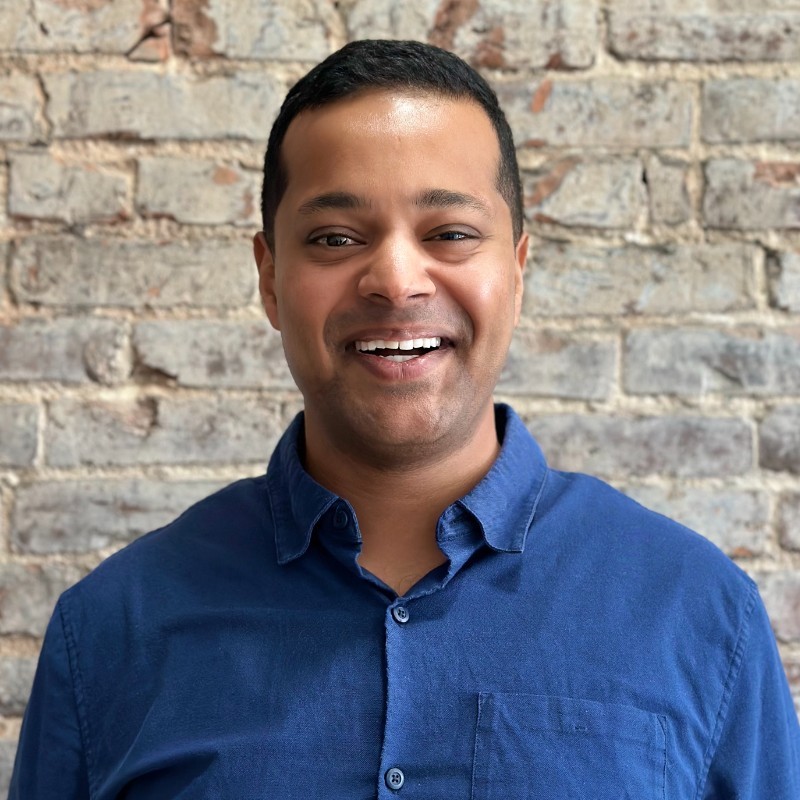
Santosh Sankar
Managing Partner, Dynamo Ventures
sponsored by