Motion ≠ Movement: Why Venture Has Lost Its Mind
001
Episode Summary
In this episode, Earnest Sweat and Santosh Sankar unpack the tension between urgency and momentum in venture capital, contrasting real movement with superficial motion in a market where capital and attention are heavily concentrated in a narrow set of AI deals and mega funds. They discuss the erosion of intellectual honesty, the dangers of consensus thinking, and how kingmaking dynamics and low seed-to-Series A graduation rates are reshaping the landscape for founders, emerging managers, and established firms alike. They also explore the history and “eras” of venture, the pendulum between concentration and unbundling, and why conviction, independent thinking, and craft still matter in an increasingly irrational, growth-obsessed environment—framing the podcast as a candid, open exploration of how to practice better venture in public. Also, Abe Othman explains that AngelList’s fund benchmarks show successor funds grow mainly by adding new LPs rather than expanding commitments from existing ones, which was a surprising and important finding for emerging managers.
Show Notes
Topics in this conversation include:
- Urgency vs Momentum in Venture Investing (0:11)
- Introspection vs Action Two by Two Matrix (4:01)
- Series B Market Example and Lack of Rationality (5:45)
- Intellectual Honesty and Independent Thinking for VCs (7:08)
- Why Start this Podcast and What Makes it Different (10:38)
- Need for Candor and Calling Out Bubble Dynamics (12:39)
- Technology Shift Compared to Cloud, Mobile, and PCs (18:24)
- Venture Equals Growth and Rise of Mega Funds (22:08)
- AI Funding Concentration Across Deals (24:29)
- Angellist Fund Benchmarks and LP Composition Surprise (26:00)
- Implications for Emerging Managers Always Fundraising (28:55)
- Craft of Venture vs Using Capital as an Advantage (31:08)
- Seed Managers’ Existential Questions if Mega Funds Move Downstream (35:09)
- Venture Eras, Unbundling, and Rebundling of Firms (39:01)
- Funds Over $500M Capturing Most New Capital (43:31)
- Anticipating Ecosystem Gaps vs Reacting to Lagging Indicators (45:51)
- What if This Time Is Different and Mega IPO Validation (51:03)
- Holding VCs to the Same Bar as Founders on Learning and Resilience (56:19)
Venture has plenty of content. What it lacks is candor and curiosity about the craft. Hosted by Earnest Sweat and Santosh Sankar, Carry On is focused on what building a firm actually looks like, not the highlight reel. Each episode breaks down the X’s and O’s of venture capital, traded openly between two GPs and a small circle of friends who live this work. From first funds to franchise firms, specialists to generalists. Learn more and subscribe at www.carryonpodcast.com.
Full Episode Transcript
Earnest Sweat 00:06
One thing I’ve been thinking about here in San Francisco is this idea of urgency, like
Santosh Sankar 00:18
speed growth,
Earnest Sweat 00:20
yeah, urgency, but just more looking like, before we get into, like, the whole market, like, just for venture capitalists, like, like, there’s this feeling of urgency. You always need to be urgent. Yet we’re in a, in a role where we’re supposed to be, like, thinking about the future, and yet you have to when you’re thinking about the future. You also have to make sound decisions, like in the now,
Santosh Sankar 00:52
yeah.
Earnest Sweat 00:53
And there’s this idea that the best, I don’t know the best predictor of success, whether it’s our companies, whether it’s our firms, whether it’s us as individuals, is momentum. And so I just really been thinking about like, how do you balance both of those as an investor? And the two things are urgency and momentum are kind of two sides of the same token. But I think, or I could just be projecting, I think we think them as like the exact same thing,
Santosh Sankar 01:35
urgency, momentum. I once heard this statement by someone that said, Be fast, but don’t be in a Huey. And that’s what that kind of reminds me of. Where we’re in venture. Venture calibrates around growth. Venture invests in growth. And behind growth are operators at startups who move with the sense of speed and urgency and kind of abstracting that back, perhaps to venture. And it’s a bit palpable on this trip where, like people are kind of running around, like, there’s, there’s kind of sense, like, you’re, you’re running around, you’re, you’re, you might be acting in a Huey not being quick about something. And I think kind of the difference is, when you’re in a hurry, you’re sloppy,
Earnest Sweat 02:34
yes,
Santosh Sankar 02:35
and maybe that’s kind of what you’re getting at. Like, are we taking the time to actually step back and say, What do all these things mean in front of us, the confluence of trends and factors we’re grappling with, and how do we take a position on the future and then invest in that? Whereas right now, are people just kind of, you’re kind of just doling out the cash, hoping that you strike gold at some point. And that’s sloppy.
Earnest Sweat 03:00
It makes me think of two things. You know, as anybody who knows me knows I spoke to me, I sometimes speak in cutaway scenes of a family guy. One cut away thing that comes to me is just talking to a number of friends here in the valley, sometimes even in New York, that are in venture. It feels like we’re all saying the same talking points, and moving to the next thing. And the cutaway thing that comes to me is just like Scooby Doo and you know that? You know, the bit that they always have when they’re being chased by the ghost. So they’re just going from room to room to room to room, and it’s just like, yeah, there’s action there. And at some point they’re actually chasing the ghost themselves. That’s right, that’s right. But are you taking the time to think, are you actually making any progress? And so
Santosh Sankar 04:01
motion versus movement,
Earnest Sweat 04:02
exactly. And so that’s the thing where, and as at the time of the recording, like two weeks ago, you know, the debate on if great men are introspective or not. And it makes me think of like, alright, if there’s a two by two matrix, and it’s like introspection on the x axis and an action on the y axis, you don’t want to just be all action with no introspection. And you definitely just don’t want to be introspective with no action. You just ruminate. You’re not doing anything,
Santosh Sankar 04:41
yeah. And
Earnest Sweat 04:42
so you have to find that balance of like, am I thinking about something like, why am I seeing three companies that are all doing the exact same thing, right?
Santosh Sankar 04:53
Yeah. And might have very similar growth,
Earnest Sweat 04:55
right? Yeah. What is it? What does that mean? Is this a category I want to be in? You know,
Santosh Sankar 05:02
and that’s being introspective, yes,
Earnest Sweat 05:04
and then the action is like, all right, taking the time to think, talking with your team of like, Hey, this is how we’re going to approach new categories that you know may be very you know, competitive all seem promising, but like, how are we going to adjust? And we can’t use the same tools that we used in the past, and metrics,
Speaker 1 05:30
and so I’ve
Earnest Sweat 05:31
I’ve just been really thinking about that, because I’m seeing a lot of action, seeing a lot of people moving from one term to the next term . We all love physical AI. Do we know what that means?
Santosh Sankar 05:45
Yeah, and is that actually kind of a new thing? Or, yeah, I ran into a buddy of mine who spends more of his life kind of Series A, Series B. But, I mean, he was talking to me about his portfolio, and he’s like, Listen, I have two companies. They both are clocking in about four or 5x year over year growth. They’re in the market for Series B, or we’re in the market for Series B. The one did about 60 meetings, got one term sheet. The other did something similar, actually a bit more, probably a bit closer to 70, got no term sheets. And he, I looked at him, I go, like, how do you parse that? Like, like, what does that mean? Like, rack, like, we need to be rational actors.
Speaker 1 06:32
And
Santosh Sankar 06:33
It feels like the broader venture market is not necessarily reflecting that rationality back. And he kind of held his head in his hand. He goes, I don’t entirely know. And he also kind of made mention, and we’ve, we’ve heard this and talked about this, even independent from this particular individual, that it just feels like all the capital is chasing at any given point 10 to 15 deals, and that’s it. If it’s not those 10 to 15 names, it just ain’t happening.
Earnest Sweat 07:08
Yeah,
Santosh Sankar 07:09
and, and that kind of goes partly to what you’re saying as to, there’s a lot of action, there may not be a whole lot of introspection, just stepping back, breathing a bit, and saying, but what is it that we’re trying to do? Investors feel like they’re unwilling to do what investors are actually paid for, which is holding opinions and holding opinions that might feel people use the word contrarian. I don’t know if that that’s exactly what I’m getting at here, but, but being independent thinkers and and making informed investments based off of the work you put in, rather than just being in a modality where you’re acting first and then thinking about it later, because something bad happens to an investment you made.
Earnest Sweat 07:51
Yeah, it’s like, you know the term would in my like, almost 12 years in this business, the idea of, like, intellectual honesty would always kind of come up in firm building in conversations about, like, what are we doing? And at a certain point we’ve just kind of become, like, a long time ago, when I started my career was just become like equity research, where it’s like, you know, I would do the numbers, have my opinions and assumptions, and then my boss would be like, can you check SNL see what the consensus is saying? And in the private market, that’s kind of what we’re doing right now. And, you know, there’s a lot of fear associated with that. And in a career where you’re actively trying to predict the future, you need to be an independent thinker. That’s what’s going to make the team better. That’s what’s going to make your investment better. And with that understanding that, like, yeah, it might not work out,
Santosh Sankar 09:04
yeah,
Earnest Sweat 09:04
but I believe that it will be right. Like, you have to have hold both those things true, yeah,
Santosh Sankar 09:10
well, and VCs are in this privileged position of your job is to have opinions and take risk the LPS that back. You understand that not everything’s going to work out, yeah and and yeah, that like modulates based on the stage you invest in, but having an opinion and taking risk generally means that you need to have an independent thought. Oftentimes, that thought is not obvious to the masses and over time, part of what is embedded in that process is you believe that your off mainstream perspective and action you’re taking off that perspective by making an investment becomes mainstream, because that’s your kind of return start to accrue. But that’s not going to be. Be the case of everybody just piling in on to what is deemed to be a consensus view
Earnest Sweat 10:04
and
Santosh Sankar 10:05
a consensus set of investments. And that’s going to maybe even homogeneous, even if returns are good, it’s going to homogenize returns across a variety of firms, because you’re all kind of either in the exact same name or the one of kind of three things at which point, then LPs are probably going to step back, or even you yourself as a GP are going to step back and say, so like, what makes this a better investment than this one or this one? And in a lot of these markets, it’s not necessarily winner take all, at least at this point we can’t tell.
Earnest Sweat 10:38
Yeah, so I think that’s a good point to stop where we My question is, like, one, why are we fucking doing this? That’s not a meta question. Just like, literally, why are we doing a podcast? It’s not like, yeah, you can, we’re an anomaly. First, like VCs, to do a podcast is plenty,
Santosh Sankar 11:07
God knows the world probably doesn’t. We each
Earnest Sweat 11:09
have our others that we
Speaker 1 11:11
do.
Santosh Sankar 11:11
So, yeah,
Earnest Sweat 11:12
So why? Why did you, you know, want to embark on this kind of crazy idea to think that you and I could provide something different to the marketplace?
Santosh Sankar 11:28
We we have this, this kind of quick Dynamo that will come up occasionally as to VCs, oftentimes won’t actually tell you what they think like when, when founders come back and they go, this is what like they passed, or there’s the feedback and a little gentleman saying, okay, like, what do they say? Or could you send us the email or say, like, this is actually not what they mean. Like, VCs as an industry, I think we could do a lot better being much more open and candid than we are. Yeah, this occurs behind closed doors in certain rooms, but there’s a lot of value in exposing parts of those conversations and being able to explore in the masses, or, like, with the masses, rather like, let’s learn and be curious together, but also have that candor as to this is what’s happening. And it’s okay to say, like, some of this stuff is fucking asinine. Like, we cannot be independent thinkers right now. We’re actually not thinking about building durable businesses that can still grow quickly. Instead, we’re over indexing right now, really growth at all costs, that is creating a bubble.
Earnest Sweat 12:38
And we just went through this.
Santosh Sankar 12:40
And we just went through this. What? It’s 2026 we’re three years removed from a covid era bubble popping, yet we’re entering, we’re willing to enter another one. And is that because ventures are about growth, and that’s just how growth is. Growth is manifested. Wherever you are looking for outlier growth, you also are going to end up in a kind of bubble, like environments, maybe, but I don’t know if those things are, necessarily always joined at the hip, but kind of going back like, why are we doing this? Let’s explore and be curious in the open. Let’s have the candor that we want others to have and express when they think about the craft adventure, and this is about building and improving on this craft together.
Earnest Sweat 13:28
Yeah, I have great answers. My reasoning was because I feel that I don’t know when we could say knowledge work started, I don’t know, you said 1950s I don’t know, but we’ve had this first kind of era of knowledge work. We really focused on exalting, and rightfully so, experts, right? And exalting those who have spent time in specific industries and specific studies, and, you know, catapulted them to help lead us in different areas, right? And we’re still doing that, obviously, and I’m a proponent of that, but in a day and age when we have access to information like never before. Knowledge is not in a specific like going very, very deep is not an advantage anymore, and maybe it’s a result of, like, I don’t know, the the brainwashing that I had at Columbia with our curriculum, of core curriculum, where we just became the most liberal arts school ever, and just like try to learn literally everything, or, you know, recent books that I’ve I’ve read on just the importance of lateral thinking, I do believe in today’s time. In a world where things are becoming more and more siloed more and more, you know, many bubbles all over the world, in different industries, countries, whatever, we need more bridges and more lateral thinking. And so it’s a time for the general and general is going to be in all different types of ways. But your ability to like being able to see things from different areas and apply it to your industry, that’s when breakthroughs happen. And so for me, people will probably get tired of this over time, or maybe it’ll just be right in that line. Anybody who’s a sports enthusiast, I’m gonna come up, I said, talk a lot of sports, positive sports analogies, but I was fascinated with, like, how JJ Reddick was able to go from, like, middle school AAU coach of his sons to, like, to the Lakers, yeah, and his ability to, you know, show, showcase his mind. And with, like, arguably one of the best, greatest minds in basketball ever, LeBron and that mind the game podcast, I was like, that’s what’s needed in venture, is being able like, to like, you know, be able to weave between like, showing novice what the technical like aspect of the game is, but then also provide insights to those who are in it and love the craft. And so I’m not saying you’re LeBron. I’m definitely
Speaker 1 16:34
saying,
Earnest Sweat 16:34
I’m definitely saying you’re not LeBron today, but I’ve always appreciated your like, like seriousness to the craft.
Santosh Sankar 16:48
I appreciate that.
Earnest Sweat 16:49
And I was like, you know, I’ve known you when we were both kind of like, when I was starting at a Prologis and and your, it’s been a decade. Yeah, your hustle, but then getting to meet you and, like, getting closer during Kaufman, I was like, Man, this guy is really a student of the game. Like, he could just stay in his own like, but he’s trying to learn everything within venture from the history, but not be bound by it, and see, kind of, like, where is the like industry going and so that’s when I was like, man, we should do this, and we should, you know, how do we help carry on the industry?
Santosh Sankar 17:30
I love that.
Earnest Sweat 17:31
Yeah, that was corny, but it kind of worked. So that’s why, that’s why I wanted to do this podcast. And I think I’m looking forward to, you know, us having conversations, being curious, showing conviction, showing vulnerability on stuff we’re actively thinking about.
Santosh Sankar 17:53
Yeah,
Earnest Sweat 17:53
and hopefully we can push each other and be pushed by the audience as well. If you know, founders, VCs, fund managers, LPs, everybody, just folks interested in the space, yeah. And then we’ll have some guests on too, of folks that have done it before, actively figuring it out. And I’m excited about it.
Santosh Sankar 18:13
I think this is such a dynamic time in the venture industry where everything is shuffling and resetting beneath our feet.
Earnest Sweat 18:24
Yeah,
Santosh Sankar 18:24
back to back to your point, right? Like one, there’s, I’ve always believed there’s a lot of value, kind of looking back, because history, I do strongly believe rhymes, it will, will seldom repeat. But from that, we have a little more of an advantage to figure out what, what should we be looking for in the present and projecting into the future to understand how to position ourselves, our firms, our companies, the ecosystem, yeah, and not just, not just fall victim to, this is currently the game on The field, and you just have to play,
Earnest Sweat 19:01
yeah,
Santosh Sankar 19:02
that doesn’t always end up in a great spot. And I think right now, perhaps we have not seen such a shift in technology. I know a lot of people kind of talk about cloud and mobile as being the last shift, but I’m not sure what we’re going through right now. You can really even compare that perhaps to a kind of personal computing. Was that last major she ever saw that was so profound?
Earnest Sweat 19:26
Yeah?
Santosh Sankar 19:27
So profound.
Earnest Sweat 19:30
Wait one quick sec. Let’s move up a little bit more. See if you’re good. Yeah? Thank you.
Speaker 1 19:36
Yeah,
Earnest Sweat 19:37
just in case. So I think a great place to start is like, if you read the headlines, even if you’re in the business, or, I’m sorry, outside of the business, you’re seeing a contraction of capital going to a certain amount of firms.
Santosh Sankar 19:57
Yep,
Earnest Sweat 19:58
you’re seeing you. Emerging managers having a very difficult time is just not everybody. And obviously we know that our industry is about outliers, but like not everybody, but in general, like having a tougher time than peak. Kind of 2021, 2022, IPO markets, although with some kind of current, like optimism, which, which I actually believe in as well. But you know, really focus being on a few names who are going to have historic IPOs is what’s expected, and the founding of the landscape for founders in being able to raise in graduation rates like as a Series A investors seen and talking to a lot of my seed and pre seed folks like yourself, graduation rates now from seed to series, as I believe status I saw was like 17% or something like that.
Santosh Sankar 21:01
Yep,
Earnest Sweat 21:01
when I think about when I was first starting in 2015 it was probably double, if not, it’s
Santosh Sankar 21:09
probably closer
Earnest Sweat 21:10
to hate, like, like, like, of it, so of that figure. So you got all that going on. We have macro events that are serious events, geopolitical shifts, and on top of all of that, the labor market is drastically changing, or brace for a change, because we have the technological shift that’s unlike any other. So how do we like, how do you take in all that. When somebody asks you both a novice, you’re in a group of three. You are a novice to the industry as well as somebody who’s in it. Like, what do you say? Oh, man, we’re fucked. Like, what do you say? So
Santosh Sankar 22:00
we, we haven’t seen concentration if we take a step back, right? We’re talking about an ecosystem of investors that invest into what they believe to be the technology driven category leaders 15 years from the point of first investment.
Earnest Sweat 22:20
Yeah,
Santosh Sankar 22:20
I think the latest data says that it takes from first investment to ultimately harvesting a return in a massive outlier business about 13 to 14 years. So let’s kind of call it 15. And behind this is growth. Ultimately, I think Paul Graham is famous for saying, like, you can actually simplify startups, startups equals growth. And then, as I’ve kind of been in the business for the last decade, I’ll equally tell the kind of new associates that come into our firm or the industry, abstracting that venture equals growth. Because if venture equals startups, right, venture equals growth. And so where we are today is a situation where you have a handful of firms that have accumulated and bloated their fund sizes. And maybe there’s an overly negative connotation to the word bloating a fund size, but they’ve grown their AUM to such a degree where they have attracted and amassed the vast majority of venture dollars being invested in the ecosystem, and that has created a lot of interesting impact. Where when you are investing from a billion, $2 billion type platform. You can no longer just be the Hey, I’m the Series A, B, C firm, or I’m the late stage growth firm. A lot of these firms are just pushing their way down into an area that was for a long time, and I still truly believe is much more of a craft and a boutique business, being able to get from an idea to product market fit, being series A ready, that’s really messy. It requires a lot of time, effort, and energy. It can be highly emotional as well. But these firms now, as a result of capital scale, are pushing down and taking option checks.
Earnest Sweat 24:20
Yeah,
Santosh Sankar 24:20
at this stage,
Earnest Sweat 24:21
yeah.
Santosh Sankar 24:22
And behind that are kind of a lot of incentives we can kind of unravel. But I pulled up some data earnestly, where when we look at the AI share of funding, 65% of deals last year went to AI related companies? Yeah, two thirds of investments just went to AI. A third went to everything else. Like, what does that mean? Like, that is then concentration of another level we have. Like, there’s concentration at every level in the venture ecosystem and capital stack. And how is that going to unfold? How do you compete and operate in this? Build new firms or allow your firm to endure that’s something that’s being actively figured out. And you know what? They’re going to be. A lot of firms that we probably have grown accustomed to knowing, have befriended, have worked with, for the last decade plus, and probably view to be stalwarts of a venture that may or may not be around 10 years from now.
Earnest Sweat 25:22
Yeah, if
Santosh Sankar 25:22
this continues,
Earnest Sweat 25:23
yeah. The thread that from, from that, from your comments, that kind of resonated with me was things being actively figured out. And part of me kind of questions like, Is it being actively figured out, or is it kind of the easy road traveled, or, you know, path of least resistance, right? If you’re a single investor in a partnership, and you pitch a highly contested meaning, like a lot of competition from your peers that are going after this deal, that’s an AI deal. Nobody’s going to question why you’re doing that deal or looking to do that deal, there’s a lot of confirmation bias. And so is that actually kind of doing the work and actively figuring it out based or is that just moving along with the tide of concentration? And that makes me think the other thing I’m trying to connect the dots to is like this movement of, kind of like, it’s kind of like a movement away from The craft towards, kind of using capital as an advantage. Advantage, right? Yeah. And so, are you losing something in the craft? Because I would argue, actually, that the craft adventure, if you focus on a specific round or stage or and I don’t think we can kind of use the kind of like, you know, what do the letters mean at this point?
Santosh Sankar 27:23
They’re, they’re meaningless.
Earnest Sweat 27:24
It’s kind of like, and I’ve written about this before, but it’s kind of like, if you talk to somebody about, what are the positions of basketball, like, what actually is a point guard anymore? Yeah, so it’s now more of like, it’s not point guard, shooting guard, you know, blah, blah, blah to center. It’s now just like, all right, ball handler, wing and big man. That’s literally all there, yeah, and so it’s but I do think if you focus on those, like Inception, so inception was kind of like pre-seed, and seed to kind of like, I don’t like early growth, A and B to like whatever pathway that IPO super growth. I do think there’s a craft in figuring out, because we’re at a point now where your ability to stock pick is so important, because we’re not in an industry anymore where you can have real information arbitrage, I say probably past pre seed on like, this idea of, like, proprietary deal flow. I’m not really questioning, like, what does that mean?
Santosh Sankar 28:38
I never truly knew a proprietary deal flow actually meant. So you’ll, you’ll find that you probably can’t find me ever saying and doing, because I just didn’t really know what it meant outside
Speaker 1 28:50
of
Earnest Sweat 28:50
people. I hope people don’t, like, clip up you, but, but in proprietary deal flow, but
Santosh Sankar 28:57
like, I mean, like, what? What exactly is it? Because even, like 10 years ago, you don’t need to go back 10 years, like five years ago, like it was probably in a lot of pitches. This is why we win. This is why we’re great. Are you telling me, though, as a firm, you’re the only person or group that knows about a particular team working on something, getting ready to go raise that is in such a minority. The only place that I could like, rock it and understand it and agree with it is if you were, like, effectively a studio model or an incubation shop where that like is truly proprietary, because you went in, you put in the work, you convince some amazing, talented people who may or may not have already been interested in this area to come join the journey. And you capitalize them and enable them with something even beyond capital to go on the journey. And I think, like. Going back to a kind of statement of like, is everybody a generalist, depending on the vector the one area that I would push on is there is a lot of nuance. And I think when people are talking about AI businesses actually being built and delivering value for customers, the rise of the F de has emerged once again, and what that shows is like the importance of context and understanding the actual situation and the nuance of a sector and the workflows. And that’s where I do think there’s a balance of being a specialist, but I’m also talking my book a little bit as a specialist and industry oriented investor, but that’s where we’re seeing things break down, that kind of the generalist playbook doesn’t always work when you build businesses. How does that apply to building venture firms? And kind of, going back to I think, what your original statement is, are we actually trying to figure this out, or are we allowing ourselves to be swept with the wave that has shown up. I think behind closed doors, people are trying to figure out what this means, but in the same vein, I need to be seen as doing something and in the market and investing. Because for one, my LPs are giving me, paying me management fees, or I’m taking management fees from my LPs.
Earnest Sweat 31:22
Yeah,
Santosh Sankar 31:22
I need to show something for it,
Earnest Sweat 31:24
yeah,
Santosh Sankar 31:24
but I believe that I can simultaneously continue to invest while figuring out what I need to do for my firm on a more strategic basis in order to endure and set up for success?
Earnest Sweat 31:38
Yeah,
Santosh Sankar 31:38
I don’t know if those things are necessarily mutually exclusive, and maybe the irony is, the larger you are, the more ability you have to do both at the same time.
Earnest Sweat 31:48
Yeah, I want to think about where we are in eras, right? Not that all you Swifties out there eras, I know, take a shot if you’re playing the Taylor Swift game. Would carry on. But anyway, and so I’ve always tried to, like, think about, like, where are we in the venture market today, and what era, era are we in? And so if you think about, kind of like, you know, the very beginning and 60s and 70s, very boutique, artisanal, not that many GPS, handful
Santosh Sankar 32:33
of firms,
Earnest Sweat 32:34
handful of foreign
Santosh Sankar 32:35
mostly Here,
Earnest Sweat 32:35
mostly here in Boston. Yeah, mostly Boston here. And very collaborative. Lots of people hear stories of famous companies being able to go to all the different firms and saying, hey, we’ll do it if you know, we do it with these guys, and a lot of kind of like collaboration. Then if we fast forward, we start to see the early days of the specialists in the 1990s . I remember reading one book, and we’ll make sure, if we say something wrong, that we just call ourselves out, and they’ll have something below us in production. But I remember reading one book I was saying, like the 1990s we started seeing specialists like a cell started as a telecom fo focus fund. And so as we moved on, there, got past the.com era, we started to see kind of like this idea of, how do we provide more value? And that’s when you start seeing Andreessen come up in the late AWS, early 10s, teens, and kind of the CAA model. Then we felt we had like, a mini era of like, how do we use data as a marketing tool, and so we provide data, and there’s a number of firms who’ve done that. Then we moved on to, I think the stage that we’re in, kind of like right now, is this idea of branding and branding in each firm becoming their own kind of mini or or huge kind of media company. And what we’re trying to do is very similar to what we ask of portfolio companies, especially in the consumer space, is, how many eyeballs do you have? Like, how much time are people spending on your app? How much time, mind share, literal mind share, of people do you have? And so that’s kind of setting the stage, kind of like all these places where, where do you see us? Kind. Today and, and is there anything we can kind of pull from all the things? Because I know when we spoke earlier, you was talking about kind of this idea of, like a pendulum swing and yeah, like,
Santosh Sankar 35:11
yeah,
Earnest Sweat 35:12
with the new ages of emerging managers, and now the consolidation of capital.
Santosh Sankar 35:17
So I totally been in our notes, I’m going to kind of go back to that, because
Earnest Sweat 35:22
you don’t have
Santosh Sankar 35:23
to. I think it provides good structure. So I’m not sure how familiar a lot of folks are with Howard Marks. Maybe more now than they were when we got into the venture, and both of us kind of came through a finance matriculation van. But Howard Marks is one of the greatest cross asset investors to ever operate. Found a firm called Oak tree. And Howard Marks has this concept in any asset class where you invest in the pendulum, and the pendulum is always swinging between two massive extremes. And the thing that he always thinks about as he goes from credit to equity to private equity, is where’s the pendulum relative to where it should be? The pendulum seldom is in the middle, but is it on one side, what action do I take? Do I short a position? If the pendulum is kind of long on the other side, is there a lot of value? And should I go for a long position? And that doesn’t quite fully map to venture like for like, because you can’t really hold a bearish position in a company. I guess a bearish position is not investing,
Earnest Sweat 36:39
yeah.
Santosh Sankar 36:40
But as I kind of think about this, I think venture is always kind of gone back and forth in terms of, like a fund level, between having fewer firms and many firms. And if, if we kind of go back, let’s go back to the mid 2000s I think 2004 is when first rounds raised its first fund. That was around, kind of the Cambrian explosion of, hey, we can have this thing called the seed manager. And they tend to come in at that inception, formative stage of a company, and get you to a point of product market fit and the ability to scale, which is what the A and B investors are good at. And kind of on the back of that, as you kind of cross 2010 into the kind of mid part of the 2010s you had this, like the Cambrian explosion of seed managers. And we’ve kind of had that up until probably 2023 2024 it was, it was really fucking good run, right? But, like, if you sat at some of those older franchises, who, at that point, still relatively speaking, had raised quite notable fund sizes, what were you thinking here? You probably were like, hey. Like, what does this mean for me? Yeah, Where do I sit in this regard, but it was probably a bit easier to crop because there are just fewer firms. Still, it’s much clearer what we’re doing as the New Kids on the Block. This is what we think you do as the more established players around. And there was a bit more division of labor, kind of pulling from the types of things I like to invest in. But there was a pendulum swing there, right? You had kind of concentration, and you had kind of an unbundling, almost, of investing across stages, rather than one firm willing to go from inception all the way to pre IPO. There is now a kind of unbundling of the stage there. Then toward the late 2010s We were established in 2016 there’s even an unbundling of industry competency as well. Yeah. And you even saw functional competency you had. The kind of firms are really good at sales and sales enablement, the more technical firms that ended up coming on the scene. And I think where the pendulum shifting now is, we’re just in the massive world of aggregation of capital and even maybe the RE aggregation of stage and sector competency. The question now is, does that work? We’ve for 10 years been in a place where all these things were unbundled. I think Jim Barksdale said there’s two ways to make money, you bundle or you unbundle, and venture is still a business. People may not treat it like that, but the way I build my firm is I treat it like a startup. If something isn’t working, I shoot it in the head, enabling my team to figure out how to fix it, because I don’t have all the answers. But let me tell you how concentrated the capital is now, because I ran some numbers and funds larger than half a billion have raised nearly 70% of the capital race to date in the last year.
Earnest Sweat 39:58
That’s crazy. Yeah.
Speaker 1 40:00
Wow.
Santosh Sankar 40:00
So like a pendulum swing and that’s where we are right now. Where are we going to go? I’m not entirely sure. But as I kind of reflect on the past and what we know about venture the most mind numbing thing and frustrating thing is, as a venture manager, is how long the feedback loops are. You’ll know when things don’t work relatively quickly. You’ll know that generally as early as maybe 18 months, depending on what a portfolio company is doing and how they’ve been capitalized, but you don’t really know whether you’ve really won and whether the reasons you made an investment that has allowed you to win are valid for as much as long as 15 years. And I think there’s some relationship with the pendulum swinging, because a pendulum swing takes time, that is, that works in relationship with the feedback loops of venture, private credit, five year, right? Public markets within a year, sometimes depending on how the market waxes and wanes. We don’t have that benefit. But that does not mean the constant, the pendulum, in my opinion, is invalid.
Earnest Sweat 41:07
Yeah, you bring up some great points. My thought is that it’s like, how do you anticipate where it’s not even the because, because, I think trying to anticipate where the pendulum and how it will swing is something that is like, Oh, how do I predict a lagging indicator, right? You want to be able to see what’s actually going on and specifically where my mind goes. Is like, where, just like, a new type of technology, like, like, AI, or some or something else, but like, what are the new industries? What are the gaps? What are the problems that are going to be created through this technological shift? And if I apply that to then the pendulum swings of venture is like, what gaps are going to be created that are needed to have an efficient, vibrant, early stage, mid stage, growth, stage ecosystem,
Speaker 2 42:18
Yeah,
Earnest Sweat 42:19
and so I think too many times we react as an industry to lagging indicators. Yeah, and whether that’s we’re all up into the right we get, we got IPOs of companies that were started in 2015, or earlier, ventures back. People are rich. Let’s invest in more. And we kind of forget that, like it takes time.
Santosh Sankar 42:47
Yeah.
Earnest Sweat 42:48
And so for me, where I kind of anticipate is like, alright, it seems like the feedback that we are instituting in the ecosystem right now is that graduation rates are very low, so we’re determining, and as your terminology, not mine, shooting, shooting. He was talking about ideas guys, not people, shooting ideas in the head earlier. Like, this will work, this won’t work, yeah. So that’s a byproduct of kind of like, where things are going. Another byproduct is this idea of king makers, and regardless if that’s true or not, like this idea of like, if certain firms invest in a certain category, your SLL for shit out of luck if you’re if you’re invested in the other competitors.
Santosh Sankar 43:53
Does it have to do with the firm you think or the amount of money? Maybe those two things are tied at the hip, because so few firms have raised so so much of the capital,
Earnest Sweat 44:03
yeah.
Santosh Sankar 44:04
But do you think the brand of the firm is what matters, or just the fact that they parked a ton of money into a player in a particular sector?
Earnest Sweat 44:13
I don’t think most things are nuanced. I think there are certain firms with a lot of money that pack a stronger punch than other firms with a lot of money,
Santosh Sankar 44:25
okay,
Earnest Sweat 44:26
right? I think there’s degrees to
Santosh Sankar 44:30
how credible that King making tactic is
Earnest Sweat 44:34
credible the signal that comes along with that capital that can lead to more capital. It’s not just that specific firm has capital. Do they have, like, standing with the overall like,
Santosh Sankar 44:51
Are there a bunch of lemmings willing to jump off the cliff? I
Earnest Sweat 44:54
wasn’t gonna use those terms, because
Santosh Sankar 44:55
I will, but I mean, that’s kind of, I think, representative.
Speaker 1 45:00
Of
Santosh Sankar 45:00
where we are as a market,
Earnest Sweat 45:01
yeah. And so I think there’s, I think it’s a combination of both. And so for you, if we have just two types of it, like in the framework that I was using is, like I said, it’s been truncated now from, like, your pre C series, A, B, C, D, E, F, G, L, M, N, O, P, yeah, it’s been truncated to now, like, we have inception stage. I misspoke earlier, but it’s the traction stage, and then the growth stage, like, if they’re now just like that, even goes smaller to just like, super early inception, and then we do everything else.
Santosh Sankar 45:43
Yeah,
Earnest Sweat 45:45
We’re the Amazon of it. Like, how does that impact your job as a seed investor?
Santosh Sankar 45:55
I think if you talk to most seed investors who have, who have been relatively disciplined in terms of fund size, how they think about portfolio construction, where they truly believe that they have credibility to invest with an advantage and an advantage could manifest itself in a number of ways. I think the big question that is being asked, there’s probably a couple questions, but the big one is, is this time actually different? And what I mean by that is going back to so much capital has gone into these mega firms with mega fund sizes, they are now pushing down, oftentimes out of necessity, but also kind of flexing their muscle in terms of we can be more thoughtful and strategic, where, if we come downstream, we can start to hoover up a bit of ownership. When things look like they’re working, we can start piling capital in. Because the way you do kind of deliver outsized returns is high ownership, so capital concentration is a function of that, but because they’re coming downstream, they have a relative insensitivity on price or valuation. And the historic kind of perspective has been, we are going to be disciplined around valuation, because valuation is actually an output of ownership that you need.
Earnest Sweat 47:30
Yes.
Santosh Sankar 47:31
And so what is our plot like? What is our future if this time is different, and this is how the world is going to endure, what happens to us, like, does our next fund size need to be 345, x what it is now our LP is going to buy that. How does that change our underwriting? Can we compete, even at that kind of level, in terms of kind of larger fund size, because then we’re starting to maybe run into some of these guys more head
Speaker 1 47:59
on.
Santosh Sankar 47:59
Can we compete if we’re going head to head, does our value prop still hold? And if not, like, does that mean we’re just out of business?
Earnest Sweat 48:08
Yeah.
Santosh Sankar 48:10
And is there just a is there like a pending mass ext, mass extinction event, going back to my prior statement, they’re going to be a lot of firms you and I know, respect, admire, have been around forever. That may not be around at the end of the decade because of this, but that’s conditioned on this time actually being different, and there is this mega concentration, and it’s working. And the reason it would be working and validated is we’re sitting in a year where there are not one but three mega IPOs anticipated that are going to return massive sums of capital to the mega funds. Space X opens AI anthropic, and it may not even need to be in calendar year 26 is like, hey, this happens the next 18 months. These mega funds feel validated. Their LPS feel validated. The party goes on for them, but not for the rest of us.
Earnest Sweat 49:00
Yeah, fuck, exactly. So, so, why so? So what needs to be done differently? How can it be different? You know, it can’t be us, us all, and this is all small, medium sized, large ones. We can’t all have the same deck creator, right?
Santosh Sankar 49:31
You technically can with the right club skill.
Earnest Sweat 49:33
We can’t all say the same thing, and we have to be willing to be differentiated. And so I
Santosh Sankar 49:47
I guess the question is, what does differentiation mean in this era with these mega funds and does that differentiation land on the founder, who’s the customer? I
Earnest Sweat 50:00
Yeah, it’s going to I think I’m always going to be biased. I’m building a firm towards this where I think it’s going to be a human answer to it. And I always go back to this on one of my favorite scenes in American Psycho, don’t judge me, but
Santosh Sankar 50:25
scenes in American
Earnest Sweat 50:27
Psycho is, yeah, I like, I love to do the verbal ellipses so people can be like, what are you gonna say here? But one of my favorite scenes is when Christian Bale is riding in the taxi with Reese Witherspoon, and she’s like, why are you even working at this job? Like and stressing about it? Like, you can just work for my dad. And he’s, first of all, he’s ignoring her. He has his headphones on, he takes them off, and he’s like, I just want to fit in. And we have to break that in an industry where we’re expected to find exceptions. We need to be exceptions ourselves. We need to, like, all these things, like, like the SaaS era really left us in a period of just like playbooks and expectations, and whether it was an enterprise customer or consumer. We treated the subscription product type like, oh, everyone can go to Target and find the SKU that they want, turn it on, and we’re good. Tam can be this, and we’ll expect and and and so you created these playbooks that had a certain level of comfort and security. We live in a world where there’s no security. Yeah, we always, technically did, always have, and so what we asked from founders today is people who can be resilient, be very quick learners. This idea of learning velocity, yep, understand what’s going on, testing things out. What did we learn from that? Where? How do we move forward? What is competition doing? Staying extremely close. Now that we’re moving from not totally away from software, but a combination of software and services and automation means you have to stay as close to your customer as possible. And so all those things we’re expecting from our founders picking the right partners, whether that’s strategic partners, whether that’s Capital Partners, we got to start expecting that from ourselves too.
Santosh Sankar 52:48
How much of that is I? I agree with all of that. But the weird thing is that that’s a rational perspective. But we’re right now living in a highly irrational time that’s being shaped by this order of capital that can kind of go swing otherwise rational actors or decisions that are very hard to parse through in a rational way. And what I mean by that is like we increasingly kind of run into founders who don’t necessarily value hate. You can assemble the right partners around the table who can actually help you build the business, where they can give you customer access. They can help you think through product scaling GT setting up GTM to scale, scaling GTM, and instead default to, can I raise a lot of money with that? It’s naturally going to come with a higher valuation, and I’ll figure everything else out. And maybe that’s a function of when you rate when you’re starting to raise larger sums of money, even at the early stage. When I say early stage, I mean pre seed, and seed stage, where historically you would have raised, let’s say, a one and a half million dollar pre seed. You now are frequently seeing these things going three, four, even sometimes you just kind of say, okay, like, with that money, I can kind of just throw money at things, and these things, in theory should get solved, and that’s like, there’s an irrationality behind that that is being skewed by the volume of capital that’s sitting in the system that’s coming downstream. So how does one like it? One can be unique, different and try to stand out in a positive light as a venture firm. But how much does that matter? Because of this kind of lingering force of just massive sums of capital? I
Earnest Sweat 55:00
I think it’s about conviction, and it’s got, like, when you think about real conviction, it has nothing to do with the outside world. We’ve always lived in an irrational world, because when you bring two humans together, they start making irrational decisions. And so
Santosh Sankar 55:16
when you bring two humans together, say that, yeah,
Earnest Sweat 55:18
when you bring any two humans together, there’s probably a bad joke there somewhere you can always make bad decisions. And I shouldn’t say bad but like, you know, irrational decisions, yeah, because people have different perspectives and stuff, and so where I always go to is like, we have to have our own opinions. We have to have conversations. I personally, like I’ve learned kind of like through talking to people and having these conversations, doing the different consulting work, doing the different like community work, even content. It helps, giving me like the problem you talk about, not having a feedback loop, constantly getting feedback from individuals. So the same experimentation that we talk about for our founders, that’s what I mean by it like, and we’re almost weird time we should probably but like, just a thought is you could start in the mid teens, or early teens, as a former founder, as a you know, from finance, whatever you can start a firm, literally with no like, like, if I poke at you, vision of your firm, we’re going to co invest. We’re going to do all things that are not in this world with consolidation, where we’re What does feel different is we’re like, really asking, why should you exist? We’re asking companies that too now with a 17% graduation rate. So I think that’s the quick thing. People have to realize why they exist.
Subscribe
Join the Conversation
Stay close to the ideas, operators, and opportunities shaping what’s next.




Your Hosts


Earnest Sweat
Venture Capital Advisor & Emerging Fund Manager
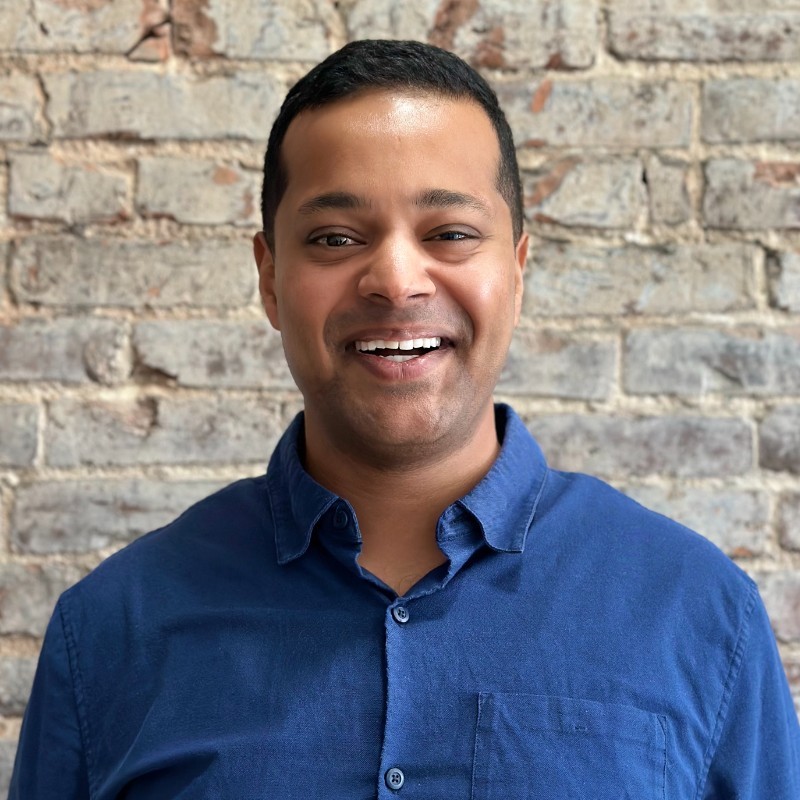
Santosh Sankar
Managing Partner, Dynamo Ventures
sponsored by