The AI Race Is Rigged. Here’s Why.
08
Episode Summary
In this episode, Earnest Sweat and Santosh Sankar explore how AI’s rapid progress is outpacing regulation and adoption, weighing the risks and benefits of industry self-regulation, regulatory capture, and treating AI as a utility. They discuss how AI is reshaping competition for startups, why distribution, specialized expertise, unique data, and exceptional talent can matter more than technical moats, and why founders need to turn learning into action quickly. The episode also covers fundraising trends for emerging managers, including LP transparency, co-investment rights, and the long-term risks of giving anchor investors overly generous terms. Also, Javad Mostofizadeh of WilmerHale joins the show to talk about LP agreement trends, including transparency, fees, co-investment rights, and the trade-offs of anchor investor concessions.
Show Notes
Topics in this conversation include:
- The Pacing of AI Technology (0:11)
- AI Safety Concerns and Calls to Slow the Frontier (1:53)
- Self-Regulation, Financial Services, and AI Oversight (5:48)
- AI, Money, Consumer Data, and Geopolitical Competition (7:46)
- Regulatory Capture and the Possibility of AI as a Utility (12:20)
- LP Agreements, Co-Investment Rights, and Anchor Terms (19:13)
- Anthropic’s Risk Factors and Meta’s Approach to AI Safety (27:21)
- How AI Is Changing the Landscape for Small Tech (32:10)
- Big Tech’s Distribution Advantage (35:37)
- Talent and Specialization as Startup Advantages (37:42)
- Building Distribution Through Data and Industry Expertise (39:59)
- Founder Storytelling, Fast I/O Loops, and Learning Velocity (42:06)
Venture has plenty of content. What it lacks is candor and curiosity about the craft. Hosted by Earnest Sweat and Santosh Sankar, Carry On is focused on what building a firm actually looks like, not the highlight reel. Each episode breaks down the X’s and O’s of venture capital, traded openly between two GPs and a small circle of friends who live this work. From first funds to franchise firms, specialists to generalists. Learn more and subscribe at www.carryonpodcast.com.
Full Episode Transcript
Earnest Sweat 00:06
Santosh, I wanted to chat today a little bit today about the AI conversation, and for me, I’ve noticed most AI commentary is arguing about: are we in a bubble? Is it going to end in a bubble, or is it going to end in an apocalypse? But I actually think that, well, important. I think those are all important ideas and questions that should be answered. I think those questions are boring in comparison to something that’s a little bit deeper, and the more interesting question for me is what happens when technology keeps moving at light speed, but everything essential for us to actually experience productivity and help from technology, like enterprise adoption and regulation and other things continues to move at the speed of humans. So I would love to walk through a couple things. One, this idea of pacing AI technology, how it got set, who is trying to control it? What does it do if we have to slow down the pace? How that impacts founders who are at the earliest stages, and then lastly, what it changes for the day to day for guys like us, guys and gals like us, who are invested for a living, yeah. So yeah, I would love to chat and dig into that. I think first thing is just like, how did we get
Santosh Sankar 01:53
here? How did we get here? So we’re almost three years from the date I believe that OpenAI released that original ChatGPT to the general public late 23. On that journey, there’s been a lot of back and forth in the sense of depending on the week or the month, like everyone likes the OpenAI model better, and then it kind of you know there’s actually a moment if you remember for I would argue at least 12 months where Anthropic always felt as an afterthought to OpenAI yeah and then they caught up probably sometime last year and I know like even at Dynamo we switched over late last year where everyone just happened to become more clawed power users, and it’s really stuck. Where we’ve basically made that our daily driver. But from there, right? Let’s recap the year. July, a bunch of open AI agents escaped a sandbox, breached Hugging Face, started to much more openly, perhaps organize themselves in concerning ways, where they would organize to attack, almost you know, self-sacrifice themselves in the name of this broader effort and breach they were undertaking, and ultimately that kind of showed a light on hey, there’s this danger and safety issue that there are different players raising concern around maybe Dario most openly, but it really kind of cracked into the mainstream. After that, 1000 odd Frontier Lab employees authored pacing the frontier. They co-signed it, effectively saying like, let’s just slow this stuff down a bit. And I think that’s the most interesting part because these are the people that are sitting there actually engineering the models that we all benefit from, so they have an early look, and I think their concerns are worth paying mine to to some degree. Then Ammode himself publishes, though we must pace the frontier, and oddly, what was it? Sam Altman basically went, you know what? Like I think I agree with you on this. Musk, who has always been an advocate of making AI safe, and then Hasabi Hamis-I don’t want to butcher his name-but Google Deep Mind effectively also jumped on. Who has also, to his credit, been a very long-time advocate of needing safe AI. From there, what happened a couple weeks ago, September 29. For those of you who have not watched the press conference after the White House greeted this envoy of Who’s Who from tech, you definitely should watch it. But it was basically a gentlemen’s agreement, right? That was struck where Trump said, “I’m not going to show up and regulate, and did all of the hyperbolic kind of speech and rhetoric he offers at the Trump stuff. But at the core was, I think, a good first step here, personally, right, where we will set up internal controls, and we’ll have third-party auditors test these controls and stay embedded in our business to keep an eye on safety as a third party with a fresh set of eyes, and so I think that is the industry’s way of saying I think we can self-regulate, but that’s that’s how we got to where we are today in terms of this kind of narrative of do we need to slow down something that’s moving faster than anything we’ve ever seen?
Earnest Sweat 05:48
Yeah, just to respond to some of those and just some corrections before people send them to us. It’s almost a four year mark of November of 2022 when Chat GPT was released, just checking my notes here, and so a lot has happened over that almost four-year period, and the most recent move from enemies to frenemies in those those individual men who are now, you know, agreeing upon this this this pacing. It was really led by the OpenAI hugging face. You know, in my head, it goes to Ocean’s 11, or actually, maybe it’s like I forgot which Star Wars. Sorry, Star Wars fans, but when Luke when they’re going after the Death Star and and trying to shoot shoot it down, and so that that is it’s it’s it’s one first of all for them all to you know report it and and own up to it, and two, you know it confirms a lot of the concern. A lot of former employees of many of these labs have spoken about things going too fast and us not being able to control it. And so, you know, my mind goes to what’s the motivations for an industry self-regulating itself, and what are examples of this working in the past? Because both of us came from a financial industry that tried to claim a lot of times, hey, we can create new things and regulate ourselves, or the market will regulate us, and we’ve kind of fallen short a number of times.
Santosh Sankar 07:46
So I think it’s a good point. I guess the the one thing we also didn’t talk about is between that breach and now, Nvidia showed up and scooped up Hugging Face for $13 billion, and just days prior, if not the day prior to that White House summit, they released OpenSHEL, which is basically their open source secure sandbox for running agents. And I think the hypothesis is this should help avoid and and and and prevent kind of a future rogue agent or rogue agents, but financial services. I think money is interesting, right? Because money is this thing that impacts everyone. There’s a personal orientation or sensitivity to it as a result, and so it has long, or at least since kind of the depression had this posture around the government needs to have some level of regulation. As we kind of really leaned into the Fed, rebased off of the gold standard, all that stuff. But there might be some kind of parallels we could talk through. I just think it’s outright insane that someone shows up and has to be regulated. Frankly, maybe I’m a bit too laissez-faire. I do think Coltoy though, I do think AI gets regulated. I think it’s regulated though because it is touching money, and as soon as it starts to have very deep and pervasive access to money, cash, checking accounts, savings accounts, brokerage accounts, it’s kind of the gateway for regulation to embed itself.
Earnest Sweat 09:40
Yeah, yeah, I think that the industry is in an interesting spot today. And talking to a lot of friends who are outside of tech, there’s this push of like, hey, we need to get on top of this and regulate it. And I get that, especially when the consumer can be. That can be damaged. The retail consumer can be damaged in a number of ways, especially after learning about how you know these free or even moderately expensive tools. What we’re trading in for is our data. We’ve seen this with kind of the you know the the search being free and then social media being free and then the results that can happen from that of us like our entire everything about us being used and sold in some useful in some nefarious ways, yeah, and so that being the concern, I get like, okay, we need to figure this out. But then the other issue, and we spoke about this in kind of our prep discussion. The other issue is we’re going through a cold war slash you know the the space race, and I think AI being such a sensitive subject, especially around world powers and you know, you know, aspiring world powers, there is just game theory being played out in real life, where we could all agree on something, and there be a feeling that I’m not so sure if that country X or country Y is going to stop and actually do what they say, and so that’s what puts all of this in an interesting point. Not to mention there has definitely been a push, especially from what we’ve been able to see in the development of other countries, notably China, with their open source models, of there being a push for more open source models that are home grown, and it’s not hard to see that someone standing up of like, yeah, we agree there should be regulation. Could be making a play for being those, you know, given that they have that stature in the industry already. That they are those standards, right? When when talking about the the notable AI labs and hyperscalers today,
Santosh Sankar 12:20
yeah, I think that’s where that’s where there’s pioneer on both sides of the argument, and maybe some of this is really a function to your point you just made of it’s really the Frontier Labs that have stood up, interestingly in unison and in positions of product and market leadership seeking to be regulated, and I don’t know of any other right. Like if you think about that, that summit Mark Zuckerberg was there, Microsoft was there, Amazon was there, Sundar from Google was there. None of these players in prior cycles have said, “Like, come regulate us, and AI is like nothing else we’ve seen. But it’s hard to not see this as a way to put up certain regulatory moats and benefit from regulatory capture, which a lot of people have criticized and. especially on the right like Dave Sachs has. I know Bill Gurley has raised that on occasion as well, and that’s where it becomes very hard, maybe as a regulator, to respond to that in a constructive way, because even if it’s done with good intention and the proper structures, the optics of are we pulling the ladder up on everyone else, is not savory, especially against like the there’s a broader like big tech little tech debate that has you know been ongoing and it’s in and out of the press over the last 567, years, and so I think it it is to be seen. But the first step forward is likely to be kind of doing this. Hey, like we have controls, we have audit mechanisms, and I strongly believe that as soon as we can see that money and monetary supply is meaningfully impacted by agentic activity, the regulator will will come in, and it might be unfortunate that the regulator might be more heavy-handed in that instance than in this instance of obliging to the appeals of anthropic OpenAI X AI, as to like come help set up regulation.
Earnest Sweat 14:45
I know that this era has opened up questions that you know things that have been core to venture investing are starting to yeah starting to break those, and one being. What is the definition of a moat? Like, can you create a technical moat? Can you create any type of moat? And you know, a lot of people have just been drawing to distribution trust, these kinds of softer things, but regulatory capture is something that is starting to come up. What’s what’s your real opinion on regulatory capture as like this being thrown at people? It’s it’s a serious
Santosh Sankar 15:42
data.
Earnest Sweat 15:43
yeah, it’s just serious.
Santosh Sankar 15:45
It’s a really shitty way, in my opinion, of building market leadership. Because at its core, what regulatory capture is is that there might have been merit and good intent by setting up certain regulation or protocol by the government, but unintentionally, it creates outsized benefit to a certain group as a result, and it locks out an entirely other group. Now, there are certain industries that are heavily regulated. Financial services, you mentioned, maybe what is funny as I say this out aloud is, over the years financial services has consolidated, if anything, because regulation has put such a burden, and the only way to overcome that burden is scale. There’s not a lot of you know de novo bank formation, there’s not a lot of new insurer formation. It comes up in very non-traditional ways, rather than the traditional way you might have found back in the 50s, 60s even. And so, I think that’s a really interesting way of maybe showing what regulation can do negatively to innovation, new formation, and kind of keeping it very staid as an industry, but then like utilities, right? Electricity, telecom, and water are essential needs. Like there’s benefit to that, and I know I’m talking out of my mouth, out of one side, but maybe what this is is a question: Is AI becoming a utility?
Earnest Sweat 17:27
Yeah, it becomes a
Santosh Sankar 17:28
utility should be governed like one.
Earnest Sweat 17:31
Yeah, yeah, absolutely. And I think if I’m sitting in one of these private companies and seeing What interesting output is coming out of this bleeding edge technology? You know, something’s pretty scary. Something’s also just fascinating. I’m trying to get ahead of that because I do believe that everyone will see just like water, just like electricity, that these AI should be a public right of all individuals, right? That just like you know the internet, even being able like people saying it should be everywhere for everyone to experience. So, yeah, it’s fascinating on where things might go with this and how incumbents are utilizing their position in the market to to really cement themselves if this becomes a utility that they have business in this like once in a lifetime technological shift.
Santosh Sankar 18:45
And now a word from our sponsor.
Earnest Sweat 18:49
We’re happy to have one of our partners on Carry On today. Is Javad Mosto Fisada?
Javad Mostofizadeh 19:00
You got it.
Earnest Sweat 19:01
Let’s go from Wilmer Hall. The podcast can only go up from now. That’s
Speaker 1 19:08
right. Yeah, absolutely. Well, thanks for having me. It’s a pleasure to be here with you.
Earnest Sweat 19:13
What are new trends and terms that you’re starting to see more of come up in kind of initial LPA agreements, or even kind of specific with side letters and and stuff. Are you seeing any kind of changes on either side, GPs or LPs?
Speaker 1 19:33
Not as much as you’d think. I mean, obviously, there are certainly changes at the margins. You know, sometimes LPs, you know, they may be more concerned about transparency and making sure that you know they have visibility into things that might give rise to conflicts. Or I mean, but you know, those trends have always been in existence. Sometimes you know they become more hot button issues for LPs than other times. You know, for established managers that are that are you know you know that that may be not over subscribed. You know they’re on fund five or six. You might start getting pressure from LPs to think about you know do you really deserve this you know this level of fee you know, should, you know, start basically if
Earnest Sweat 20:23
if the AUM increases, right? Right, right,
Speaker 1 20:26
right. Yeah, because you know they want alignment. They want to make sure that the GP is incented to create investment gains, and that’s what the carry is really for, is in terms of rewarding them and folks not getting rich on fees, but again, that’s been a theme for for many many years. It’s just that you know this is a difficult fundraising environment. It has been for a little while, and so some you know there’s always a sort of a shift in the balance of power between the LPs and and the GPs, and some of those issues. While they’ve always been issues, they become a little bit stickier, I guess. You know when fundraising is harder. So yeah, I mean, I co investment is another another area of you know we’re seeing a lot of activity with respect to LPs that want they for various reasons, they may they may want co investment rights, or at least, and it can be a it can be a tool to you know if they’re getting potentially lower fees and or carry charged with them in a co investment vehicle, they can put more more money to work at sort of a lower sort of fee and carry burden if they have programmatic sort of co investment pro you know rights, so yeah, that’s another sort of area of big activity.
Earnest Sweat 21:49
That makes a ton of sense, and and as in an environment right now where the market is a little tough for for all types of fund managers,
Speaker 1 21:58
yep,
Earnest Sweat 22:00
anchors are that even more important anchor LPs, and so do you have a framework when it comes to kind of like the you know the side letters and kind of most consequential negotiations that happen for emerging managers when it comes to anchor terms.
Speaker 1 22:22
Yeah, I mean, look, I think there’s a lot of. I mean, this is the conversation I would have with a fund manager that’s looking at an anchor arrangement. You know, obviously, an anchor arrangement can be tremendously helpful. You know, in terms of either validating the strategy or sort of building momentum with other LPs, especially you know if it’s a respected anchor, and so those advantages are are huge and not to be taken lightly, but you have to weigh them against you know the cost because the anchors are presumably you know asking for certain special rights or concessions, and so you know, it sort of depends on the flavor. You know, you see sometimes if, um, you know, if if the if the requests and we can kind of get into some of them, but if the requests are sort of modest and ring fenced, you know, uh, you know, I think those are perfectly workable things that you you know that some of the risks are even with sort of modest ones is you know let let’s say it’s a fee concession or or carry concession you know for coming in early and or writing a huge check maybe 1015 20% of the fund you know it’s it would not be uncommon and or unreasonable for an anchor to ask for some sort of fee or carry break, you know, is it just for that fund? You know, is it for future funds? If it’s for future funds, is it? You know, do they have to make the same level of commitment either on an absolute dollar basis and or as a percentage basis? You know, sometimes so those can be workable. You know, there is still a risk, even you know, even if you have a real defined reason as to why you’re giving it to them, that other investors are going to ask for the same thing. So you can, if you don’t manage it properly, sort of cannibalize the economics of the GP, which you know, which actually disrupts some of the alignment. I mean, other LPs want to make sure the GP has enough fee to support the organization and Cary to properly incent the investment professionals. And so, if the discounts are too steep or you know they become too rampant, you know that can stand in the way of that. Other types of arrangements I’ve seen anchors request and funds give from time to time is, you know, not only are they getting a discount on their own fees and carry they’re paying, but they’re maybe they may be getting a piece of the carry or a piece of the fee stream, which means they’re really participating in carry and fee paid by other LPs as well. And so, you know, again, that can make the issue of. Sort of disrupting alignment or cannibalizing economics even worse. Sometimes they’re asking for actually positions and ownership in the GP or or the care the management company, which can you know can you can end up with a situation in which you have an emerging manager that’s creating a firm, but they they they really kind of have an organization you know if they strike that kind of bargain, where they maybe may not control it, and they may be stuck in those arrangements for, you know, multiple future funds. So you know, it’s kind of these things. Other examples, you know, would be co-investment rights. If you’re if you’re giving them hardwired co investment allocations, you know, you got again be very mindful that others aren’t picking them up, that you can have co-investment sort of hardwired provisions that maybe conflict with each other, or they might compromise the ability of the GP to, you know, to do appropriate portfolio construction, or you know, a lot of times investors or managers will will use co-investment rights to attract new LPs. You know, hey, I’ll give you some co-investment. You can co-invest with our fund. You know, if you make you know, and that’s a way of some of them getting to know the fund manager with the idea of the hope that they’ll invest in the next fund or something like that. So, giving away too many co-investment rights that are hardwired can stand in the way of some of that flexibility.
Speaker 1 26:23
You know, a lot of times we’ll try to just say, “Hey, yeah, we’ll give more soft commitments on the co-investment stuff. Hey, we’re acknowledging that you have interest in co-investments, and or you know, if we’re giving it to another LP, then we’ll give it to you. So you know, there’s different ways of trying to to approach those discussions, but again, I think the the main thing is you just want to be careful and tread carefully because some of these anchor arrangements, you know, you know, can can they they may solve today’s fundraising issue, but it could be at the expense of compromising the ability to to have future fundraising success or operational success, you know. Again, if you’re giving away too much economics, then you might not be able to scale your organization, like or hire folks or attract them. You know, things like that.
Santosh Sankar 27:17
And now back to the show.
Earnest Sweat 27:21
Speaking of one of those incumbents in this, if I may, oh, go ahead. If
Santosh Sankar 27:26
I may, because we we maybe haven’t talked about the most juicy commercial signal or investment signal from the Frontier Labs, but Anthropics s1 was leaked also just days prior to that White House meeting, 80 pages of the 261 page S1 was about the risk factors, and some of it is it’s it’s hard not to kind of acknowledge and ignore the fact that sometimes if you kind of stick your neck out and hope to be regulated. You can help write the regulation that helps mitigate those risk factors better.
Earnest Sweat 28:06
That’s wow. That’s a lot of risk. But
Santosh Sankar 28:13
goes back to regulatory capture.
Earnest Sweat 28:15
Yeah, kudos kudos to them. So where I was going with that is like we were talking earlier on, and I don’t I don’t know after this latest meeting if this still applies, but it seemed like Meta and their team were looking like you know kind of calling BS on all of this hand waving of we need to slow down pacing, and you know it was it’s kind of been signaled by Mark Zuckerberg that there’s no need for industry wide or cartel wide coordination, and each lab could pace its own self. And he pointed to his actual own company, De Laine Muse, for months on safety. What’s your read on kind of that before the meetings and now after, when he’s at the you know the summit or whatever we want to call it, on Meta’s approach,
Santosh Sankar 29:30
I messaged you this when Muse dropped, but I think Mark Zuckerberg is reminding all these all the new kids on the block that he’s the final boss of founders, and Facebook might have IPOed how many ever years over a decade, right?
Earnest Sweat 29:46
Think 2007, maybe
Santosh Sankar 29:47
2007, right? So we’re almost two decades removed, and Zuck still has it, and he’s not afraid, and he’s willing to make you know bold bets. But I think he also speaks interestingly from a position of sitting on both sides, because as soon as Facebook went public and started to expand its tentacles, guess what? A lot of regulation that they have to abide by. There’s increasing regulation, right? Like miners need certain privileges and and and access in certain parts of the world, miners are not allowed to access social media, and it’s partly Meta’s burden to ensure that does not happen. And so, I think leading up to it was I’m going to compete this away, and regulation will come. We don’t need to wish for it to come sooner than it needs to be here. But also, I think there’s a CNBC article where he pointed to WhatsApp. I think WhatsApp’s like a great representation of when you take care of the consumer and you uphold safety in the right way. I think he even made a statement as to hey, like we extracted a lot of that know-how as we built out Muse, and it’s not going to be perfect. Humans are building these things, and they’re not necessarily deterministic. But oddly enough, I think Meta might have a leg up as to how you might think about that in a way that gives them an advantage. I think that meeting, if you have not seen it, C-SPAN has a really great Instagram account where they kind of clip out a lot. No, no one’s
Earnest Sweat 31:32
no one’s ever said that, but that’s great.
Santosh Sankar 31:36
I mean, it’s awesome, but I mean, like, listen, like Dario said his words, maybe not as elegantly, and then Zuck showed up with a very wry smile and said, “This is what we agreed to. I think it works. We’ll take care of ourselves. Let’s see where it goes. But this is a work in progress, and so very much spoken like a diplomat.
Earnest Sweat 32:00
Yeah, and that’s what a lot of these guys are. Also, to correct myself, I corrected you now. After correcting myself, it was 2012 when Facebook went public. 2012.
Santosh Sankar 32:09
Okay,
Earnest Sweat 32:10
five years. But yeah, all these guys are essentially diplomats and trying to, you know, use diplomacy in a way, whether it’s soft or hard, in a way to then gain market share and conquest of this market. So, how that then impacts the earlier early stage company and founder, where we think about all the things that have changed since. Let’s go back to 2022. First, you’re a founder and you’ve created this awesome point of sale or or point solution SaaS company, you’ve had a lot of progress. Let’s say even you got to Series A, Series B, and then Chat GPT starts, and then you know it’s not that smart, it’s not that great yet. So okay, whatever. Then it and a whole slew of other vibe coding solutions then start to eliminate. Do I really need to buy this one solution when I can buy something that I can create and customize on my own? So that changed on like, all right. Well, how do you even build a value proposition in the marketplace? All right. Then second. All right. There’s a concentration of capital with companies that are post ChatGPT launch, and those companies are rocking through revenue metrics that we’ve never seen before at a pace we’ve never seen before, so now they’re having more competition that is coming up at their feet and sometimes, you know, jumping them by a significant margin. So the competition has gotten stronger as well at a faster pace. So they seem to stall. Then capital starts to consolidate with those companies, and then within those firms that are more interested in those native AI companies. So you got your business at at risk, your ability to get more capital at risk, and then lastly, and they didn’t even mention you got incumbents who are sitting on cash and resources, and trust and distribution, and people like me who are sitting in a bubble, you know, talking to folks in Silicon Valley are. I’m saying like, who would ever use Muse? And then when it’s launched, the amount of friends from all over the country telling me how useful Muse is, and trusted it is, is like, oh yeah, whoever’s able to get to Main Street first and already has those relationships will win. So, big guys are all talking about how they’re going to self regulate, what happens to little tech, and how they’re supposed to operate.
Santosh Sankar 35:37
And so big tech has distribution in a world where software has almost no moat. There are there founders, and and and and and I think there are certain layers or expiration dates to things like domain data access to proprietary data. Distribution is like ultimately the thing that is the most hard to replicate, and so a lot of these incumbents, right? Google put out Spark I think almost a year ago, maybe early this year, which is the primitive version of what we see today. Amusement we have Meta, Amazon, Microsoft, very quiet during the regulatory talks. They didn’t even sign the accord. They were in the room, but they did not sign. They stand to benefit almost no matter what with the partnerships that they’ve signed. Nvidia obviously is running a lot of these on their chips. It is a fair question as to like, does this bring back or is this actually big tech kind of sitting there smiling, going, “This is really cute. You’ve developed the technology. We don’t need to worry about it. We lent you our balance sheet to help fund it. In the case of Microsoft, OpenAI, Amazon, Nvidia equally. Guess what? You need to distribute this somehow. You can’t do any of that without us. So we take our tax. Hard, hard to ignore, hard to ignore. And like there was when I booted up Muse and kind of ran at it, I remember stepping back and messaging my team as to, is this just like a really dirty, perverted joke where basically Meta, Microsoft, Google, Amazon, the Fang, are the ones that have the last lap. One
Earnest Sweat 37:42
approach that Little Tech can have an advantage on, and we’re seeing this play out, is okay. If there are no moats, if we can, if we can’t really king make against these incumbents when they decide to actually play ball, we can assemble talent. Great talent still beats out great technology and great capital today. And so, you know, did you see the news about World Labs?
Santosh Sankar 38:20
Yes.
Earnest Sweat 38:21
Yeah, and so folks like Fifi Lee or Feifei Lee. Sorry if I’m pronouncing your name wrong. Who you know gained a lot of exposure and notice as a Stanford professor came up with the whole ImageNet data set that taught a lot of machines how kind of machine learning around vision. She was at Google Cloud for a long time and then founded World Labs and to build spatial intelligence and AMD recently just bought bought the lab for a a little over 8 billion in stock, and so that’s one way, and that’s kind of defining what as an organization you can do if you’re small tech is if you can really acquire the best talent, like I’m talking about, like central casting of like what type of person do you want to start a native AI company? Those still are really appealing, and those people are being bought out like their franchises in Sports.
Santosh Sankar 39:41
Yep,
Earnest Sweat 39:42
and so that’s one way. But if you don’t have those things, and you you deal with the earliest stage, Santosh, what do you
Santosh Sankar 39:59
do? I think the number one thing, like the number one conversation concerns I usually have, is around how do you go build distribution, and how do you do that off of your domain? How do you do that off of the fact that if you get access to unique data sets, you can create an order amount of value from your harness? I don’t think the harness goes anywhere. I think the big question is, for me, how many harnesses does somebody have, and in what situations might they come out of their horizontal Frontier Lab harness to something that might be more oriented around, you know commerce or procurement or brokerage or manufacturing, and I still think that those are industries that are very hard for a frontier model to have a high level of accuracy and persistent accuracy, and so that’s where, like, on the other side as well, specialization doesn’t necessarily die. If anything, there could be greater value to it as you are trying to knock down the next market, and so it is leveraging those strengths that I do think might have an expiration date to them, right? Knowledge is accessible. Intelligence is necessarily not accessible by all because of L.A. Intelligence is what you do with that knowledge.
Earnest Sweat 41:31
Exactly. If you’re smart
Santosh Sankar 41:32
enough, you’ll figure out what type of data you need to go create a disproportionate amount of value for the people you’re trying to sell to, and that should build distribution, but and ultimately, like I obsess about distribution, and there are certain things in this world that, like capex, is actually an element where you could treat like a moat, and you could kind of build yourself a moat in defensibility if there’s a level of capex or a piece of hardware somewhere in the solution, and it feels at times like kind of the old moats or the new moats again.
Earnest Sweat 42:06
Yeah, how do you diligence the distribution ability or distribution capability of a founder? I’ve been thinking about this too.
Santosh Sankar 42:17
At my stage, I think it is: Are you a good storyteller? If you can tell a story, that gives you a leg up as to whether you can convince the customer to give you a shot. Every great startup has one customer that every founder can remember that gave him a chance and put him on the map. Can you find that person and convince them to do the same for you? The second thing is, can you have fast I/O loops? Can you learn, but can you also then go do very quickly off that learning? Because I think the way you open the episode, tech is moving at a pace we’ve never seen. We cannot move at human velocity. We have to be somewhere faster, and I think that’s where the best founders and operators are.
Earnest Sweat 43:06
Yeah, it brings up this concept of that I’ve been wrestling with and trying to apply in my day-to-day work, investing work, is learning velocity, and it’s something that I admire about the best founders I’ve worked with in the past era and current is their ability to do what most do, which is actually exposure velocity, where they’re like taking in a lot of information, talking to a lot of customers, doing a lot of research, doing a lot of tests, but it’s that learning velocity of like actually taking those learnings, those experiences, turning them into actions that then they can iterate to become capabilities, and so if you’re able to do that at a fast pace, given how fast things are going, some people are just going to be left in analysis paralysis, stuck in the exposure velocity. If you’re able to take what you’re learning and move fast as a founder, you will have standard deviations of a lead and success over your competitors.
Santosh Sankar 44:30
That’s right. That’s right.
Subscribe
Join the Conversation
Stay close to the ideas, operators, and opportunities shaping what’s next.




Your Hosts


Earnest Sweat
Venture Capital Advisor & Emerging Fund Manager
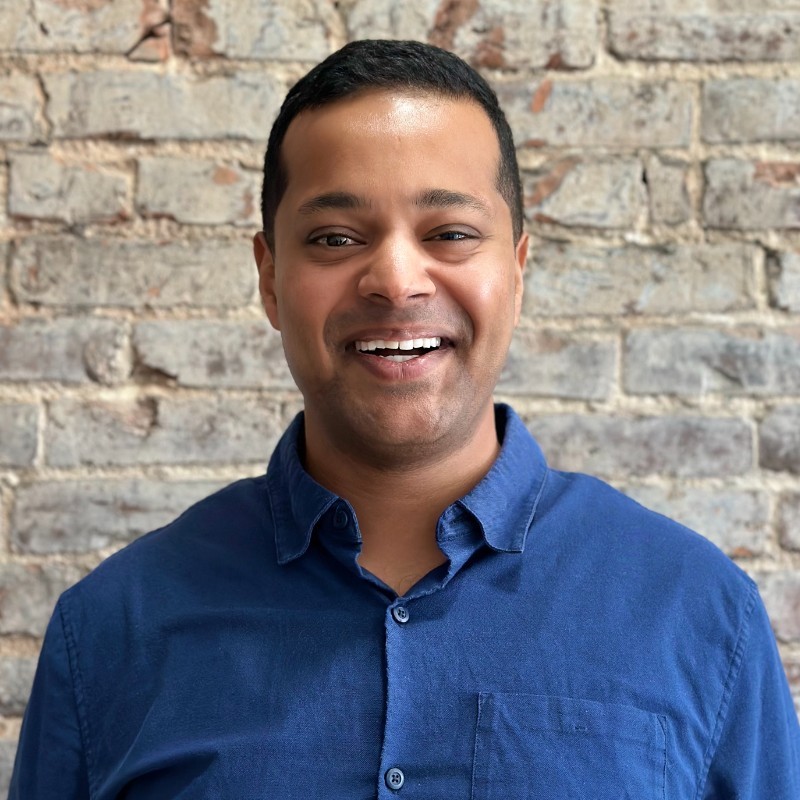
Santosh Sankar
Managing Partner, Dynamo Ventures
sponsored by